
 Follow Us On Google

Nigeria’s presidency has attracted some of the country’s most influential politicians, activists, businessmen and former public office holders since the country adopted the presidential system of government in 1979.
While some politicians, including Shehu Shagari, Olusegun Obasanjo, Umaru Musa Yar’Adua, Goodluck Jonathan, Muhammadu Buhari and Bola Tinubu, eventually secured the country’s highest political office through elections, several other prominent figures have repeatedly tried without success.
Some came close to victory, while others participated mainly to challenge the dominance of the major political parties or introduce alternative ideas into national political discourse.
The list below focuses on prominent politicians who appeared as candidates in Nigerian presidential elections but have never been elected president. It does not include every candidate who has appeared on a presidential ballot.
1. Obafemi Awolowo
The late Chief Obafemi Awolowo was one of Nigeria’s most influential political figures and remains one of the most prominent politicians never to become the country’s president.
Following the return to civilian rule in 1979, Awolowo contested the presidential election on the platform of the Unity Party of Nigeria (UPN).
He finished behind Shehu Shagari of the National Party of Nigeria, polling about 4.9 million votes against Shagari’s 5.69 million.
Awolowo challenged the outcome of the election, with the dispute eventually reaching the Supreme Court.
He returned to the presidential race in 1983 on the UPN platform but again lost to Shagari. Awolowo received 7,907,209 votes in that election, finishing second.
Despite his unsuccessful presidential bids, Awolowo remained one of the defining figures of Nigeria’s political history until his death in 1987.
2. Aminu Kano
Another major political figure who unsuccessfully sought Nigeria’s presidency was Mallam Aminu Kano.
The prominent northern politician contested the 1979 presidential election as the candidate of the People’s Redemption Party (PRP).
Aminu Kano secured about 1.7 million votes nationally and performed particularly strongly in Kano State, but Shehu Shagari ultimately won.
He died in April 1983, months before the presidential election held later that year.
3. Waziri Ibrahim
Alhaji Waziri Ibrahim, founder of the Great Nigeria People’s Party, was another notable Second Republic presidential candidate who never reached the presidency.
He contested the 1979 presidential election on the platform of the Great Nigeria People’s Party (GNPP).
Waziri returned to the contest in 1983, again representing the GNPP. He polled 643,806 votes in the election won by incumbent President Shehu Shagari.
Waziri became particularly associated with his philosophy of “politics without bitterness”.
4. Bashir Tofa
The late businessman and politician Bashir Tofa was the presidential candidate of the National Republican Convention (NRC) in the historic June 12, 1993 election.
His only major opponent was Moshood Kashimawo Olawale Abiola of the Social Democratic Party.
Available results showed Abiola ahead with about 8.34 million votes, compared with Tofa’s approximately 5.95 million.
However, the military government of General Ibrahim Babangida controversially annulled the election before the democratic transition could be completed.
Tofa never again became president and died in 2022.
5. Olu Falae
Chief Olu Falae, a former Secretary to the Government of the Federation and former finance minister, contested the historic 1999 presidential election, which ushered in Nigeria’s Fourth Republic.
Falae ran under an alliance involving the Alliance for Democracy (AD) and the All People’s Party (APP).
He faced former military Head of State Olusegun Obasanjo of the Peoples Democratic Party.
Official results gave Obasanjo 18,738,154 votes, representing 62.78 per cent, while Falae received 11,110,287 votes, or 37.22 per cent.
Obasanjo subsequently became president, while Falae never contested another general election for the presidency.
6. Chukwuemeka Odumegwu Ojukwu
The late Chukwuemeka Odumegwu Ojukwu, who led the defunct Republic of Biafra during the Nigerian Civil War, also made attempts to become Nigeria’s president.
Ojukwu contested the 2003 presidential election on the platform of the All Progressives Grand Alliance (APGA).
He finished behind Olusegun Obasanjo and Muhammadu Buhari, receiving 1,297,445 votes, or about 3.29 per cent.
Ojukwu contested again in 2007, still under APGA, but received 155,947 votes in an election won by Umaru Musa Yar’Adua.
He died in 2011 without achieving his presidential ambition.
7. Gani Fawehinmi
Renowned human rights lawyer and activist Chief Gani Fawehinmi also entered partisan politics after decades of pro-democracy and human rights activism.
Fawehinmi contested the 2003 presidential election.
He ran on the National Conscience Party (NCP) platform, the party he founded.
Election records show that Fawehinmi received 161,333 votes, and incumbent President Olusegun Obasanjo won.
Fawehinmi did not become president before his death in 2009.
8. Sarah Jibril
Sarah Jibril occupies a significant place in Nigeria’s political history because of her attempts to break the country’s longstanding male dominance of presidential politics.
She made several attempts to secure presidential nominations and became the first Nigerian woman to contest a presidential election as the candidate of a registered political party.
Jibril appeared on the ballot in the 2003 presidential election and received 157,560 votes. She later attempted other party primaries, including contesting the PDP presidential ticket ahead of the 2011 election.
She has never been elected president.
9. Orji Uzor Kalu
Former Abia State Governor Orji Uzor Kalu joined the presidential race in 2007, shortly before completing his second term as governor.
Kalu contested on the Progressive Peoples Alliance (PPA) platform.
He finished behind Umaru Yar’Adua, Muhammadu Buhari and Atiku Abubakar, receiving 608,833 votes, according to results reproduced in an International Republican Institute report.
Kalu subsequently remained active in national politics and later became a senator, but has never won the presidency.
10. Chris Okotie
Clergyman and politician Chris Okotie is among Nigerians who have made multiple unsuccessful attempts at the presidency.
Okotie first appeared on the presidential ballot in 2003, contesting on the Justice Party platform.
He returned in 2007 under the Fresh Democratic Party and again contested in 2011.
None of the three attempts produced victory.
His repeated participation made him one of the most recognisable minor-party presidential candidates of the Fourth Republic.
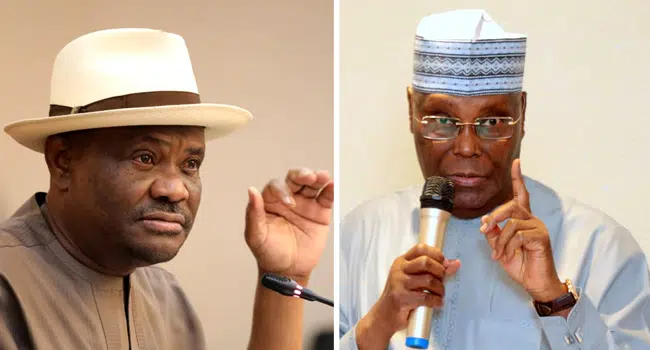
11. Atiku Abubakar
Former Vice President Atiku Abubakar is perhaps the most prominent contemporary Nigerian politician to have repeatedly sought the presidency without winning it.
Atiku served as vice president under Olusegun Obasanjo between 1999 and 2007 before making his first appearance as a presidential candidate in a general election in 2007, representing the Action Congress.
He lost the contest to Umaru Musa Yar’Adua.
Atiku returned as the Peoples Democratic Party (PDP) candidate in 2019 but lost to incumbent President Muhammadu Buhari. INEC’s results showed Buhari with 15,191,847 votes and Atiku with 11,262,978.
He secured the PDP ticket again for the 2023 presidential election, finishing second behind Bola Tinubu. Official INEC figures showed Tinubu with 8,794,726 votes and Atiku with 6,984,520 votes.
Although Atiku has sought party presidential tickets several times, he has appeared on the general-election presidential ballot three times, 2007, 2019 and 2023 without winning.
12. Nuhu Ribadu
Former Chairman of the Economic and Financial Crimes Commission, Nuhu Ribadu, contested the presidency in 2011.
Ribadu was the candidate of the Action Congress of Nigeria (ACN) and had businessman Fola Adeola as his running mate.
He finished third in the election with 2,079,151 votes, behind eventual winner Goodluck Jonathan and Muhammadu Buhari.
Ribadu subsequently remained involved in public service and politics but has never been elected president.
13. Dele Momodu
Media entrepreneur and politician Dele Momodu also made an unsuccessful bid for Nigeria’s presidency in 2011.
Momodu contested the election under the National Conscience Party.
He received 26,376 votes in the election won by Goodluck Jonathan.
Momodu later joined the PDP and sought its presidential nomination ahead of the 2023 election but did not secure the ticket.
14. Omoyele Sowore
Publisher and activist Omoyele Sowore has twice appeared on Nigeria’s presidential ballot.
Sowore founded the African Action Congress (AAC) and contested the 2019 presidential election, receiving 33,953 votes according to INEC’s declared results.
He returned as the AAC presidential candidate in 2023.
INEC’s official 2023 report shows that Sowore received 14,608 votes, with Bola Tinubu declared winner of the election.
Sowore has therefore contested two presidential elections without securing the presidency.
15. Kingsley Moghalu
Former Deputy Governor of the Central Bank of Nigeria Kingsley Moghalu joined the presidential contest in 2019.
He represented the Young Progressives Party (YPP) and campaigned on economic reform, governance and a break from the dominance of Nigeria’s two major political parties.
INEC listed Moghalu as the YPP presidential candidate, while the final election results gave him 21,886 votes.
He later sought another opportunity to contest the presidency but did not appear on the 2023 presidential ballot.
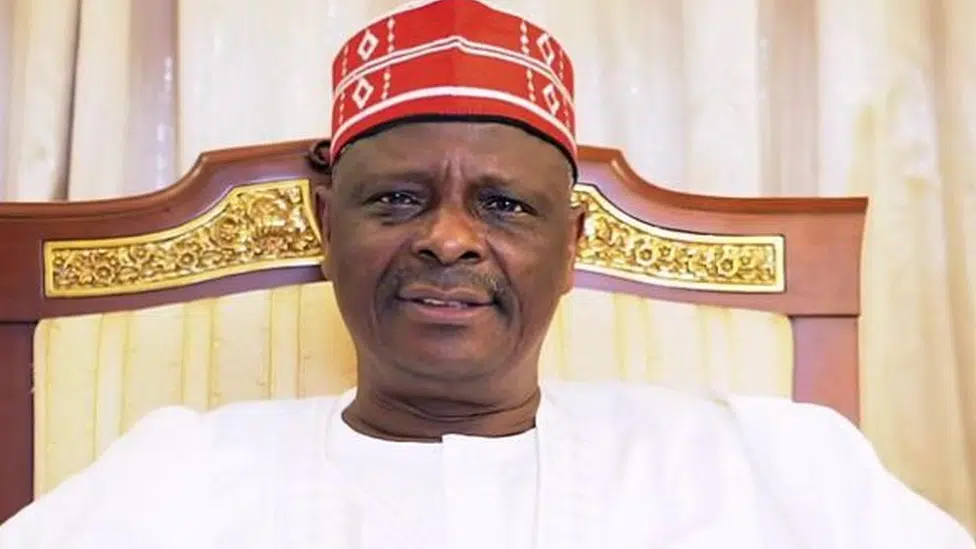
16. Rabiu Musa Kwankwaso
Former Kano State Governor Rabiu Musa Kwankwaso contested his first general-election presidential race in 2023.
Kwankwaso, who had previously sought presidential tickets in other political parties, became the candidate of the New Nigeria Peoples Party (NNPP).
He finished fourth nationally with 1,496,687 votes, although he delivered a commanding victory for his party in Kano State.
INEC’s final result placed Kwankwaso behind Bola Tinubu, Atiku Abubakar and Peter Obi.
Kwankwaso has therefore sought Nigeria’s highest office but has never won the presidency.
17. Peter Obi
Former Anambra State Governor Peter Obi emerged as one of the strongest third-party presidential candidates in Nigeria’s Fourth Republic when he contested the 2023 presidential election.
Obi, who had served as Atiku Abubakar’s running mate on the PDP ticket in 2019, left the party ahead of the 2023 election and secured the Labour Party presidential ticket.
He finished third nationally with 6,101,533 votes, behind Bola Tinubu and Atiku Abubakar. Obi won 11 states and the Federal Capital Territory, according to the declared results.
Obi challenged the outcome of the election in court, but Tinubu’s victory was ultimately sustained.





Join the conversation
Comments
Want to discuss? Please read our Commenting Policy first.