
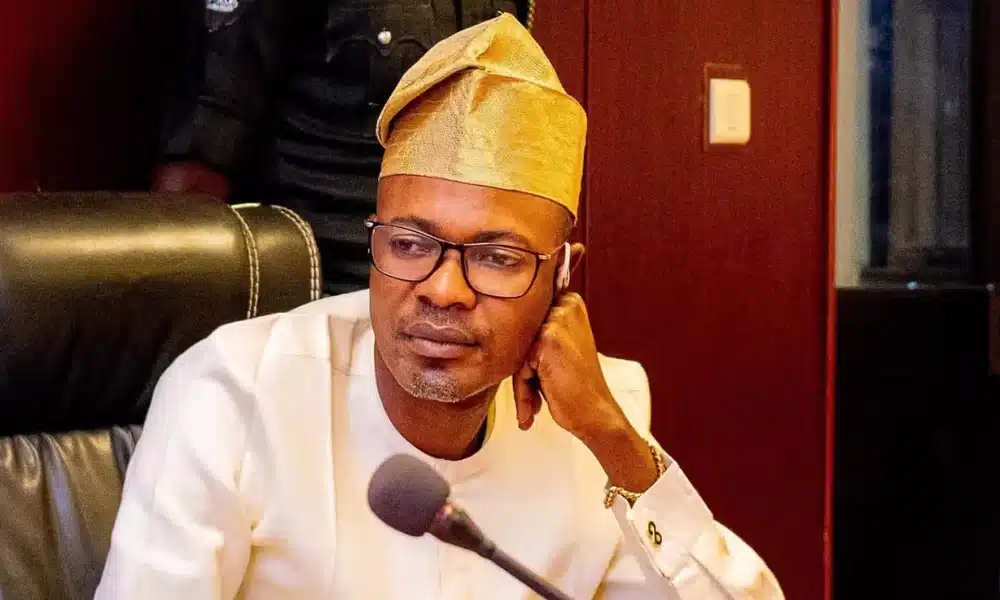
The House of Representatives ad hoc committee investigating the alleged establishment and operations of the Presidential Foreign Investment Promotion Council (PIFPC) has summoned the Minister of Foreign Affairs and the National Security Adviser (NSA) to explain how the council allegedly operated despite concerns over its legal status.
The decision followed testimony by the Permanent Secretary of the Ministry of Foreign Affairs, Mr Dunoma Umar Ahmed, who told lawmakers that the ministry had no official relationship with the council and had raised concerns over its legitimacy after receiving correspondence from its leadership.
Appearing before the committee on Tuesday with a letter dated July 21, 2026, Ahmed disclosed that Prince Adeniyi Adeyemi, who presented himself as Director-General of the Presidential Economic Advisory Council/Presidential Foreign Investment Promotion Council, approached the ministry on three occasions seeking its collaboration and endorsement to organise a World Investment Summit in Nigeria.
According to him, the requests were received on June 26, 2025, August 5, 2025, and June 5, 2026, but were not approved.
“Guided by extant rules and regulations as well as the necessity of carrying out due diligence before obliging any request, the Ministry… did not take any action on the requests,” the ministry stated in its memorandum.
The ministry added that it declined the requests because of discrepancies observed in the correspondence and the ongoing investigation into the legitimacy of the council and its alleged Director-General.
The permanent secretary further disclosed that the ministry wrote to the Office of the NSA on October 16, 2025, seeking clarification on the status of Prince Adeyemi and the council.
According to the ministry, the NSA responded on November 26, 2025, stating that enquiries made with the Office of the Secretary to the Government of the Federation (OSGF) and the Office of the Chief of Staff (OCoS) to the President showed that “Prince Adeniyi Adeyemi Mathew is unknown to any office of the Federal Government.”
The ministry also informed the lawmakers that it never participated in any diplomatic engagements organised by the PFIPC and had no official dealings with the council or its leadership.
Committee member, Abubakar Hassan Fulata, questioned why stronger action was not taken after the ministry allegedly received confirmation that the council lacked legal recognition.
“After confirming from the Office of the Secretary to the Government of the Federation and the Office of the Chief of Staff to Mr President that this entity does not exist legally, did you communicate to the so-called Director-General… that this organisation is illegal and that you should not interact with it any further?” Fulata asked.
Responding, the committee chairman said the ministry had acted appropriately by referring the matter to the Office of the National Security Adviser but insisted that the security office must now explain the steps it took after reportedly determining that the council lacked legal recognition.
“The Office of the National Security Adviser should appear before this committee and explain that aspect,” he said.
He added, “The NSA responded that it is an illegal agency. What has the Office of the NSA done as a security office after discovering that the agency does not exist? They should tell us the action they have taken.”
Lawmakers also questioned how the alleged council was able to organise events involving foreign diplomats despite the Ministry of Foreign Affairs maintaining that it had no official relationship with it.
One member recalled that the council reportedly organised a summit attended by representatives of more than 30 foreign embassies.
Describing the development as disturbing, the committee chairman said the situation exposed gaps in coordination among government institutions.
“Somebody will outsmart agencies, form a fake agency, get documents and approvals from agencies, and conduct diplomatic engagements with foreign nationals. I think this is a big insult on the Nigerian people,” he said.
Responding on behalf of the ministry, Ahmed acknowledged that some organisations occasionally bypass official diplomatic channels.
“Sometimes we find that some of these organisations do direct missions without the permission of the Ministry. We always send circulars to inform them that it is necessary to follow the laid-down channels of communication,” he said.


