
 Follow Us On Google

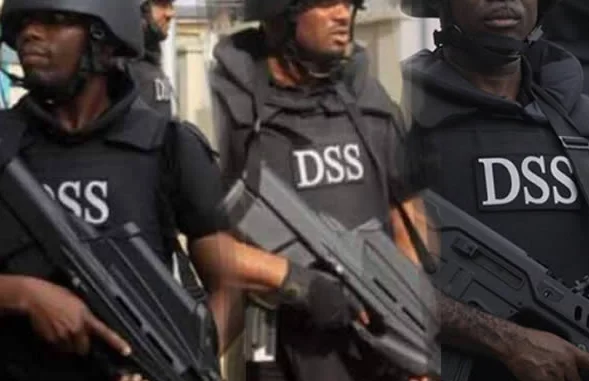
The Department of State Services (DSS) has directed its operatives to stop arresting people over civil matters, saying such disputes should be handled through the courts.
The DSS Director-General, Oluwatosin Ajayi, disclosed this during a media interview on Thursday, explaining that the directive was part of efforts to strengthen respect for the rule of law and improve the agency’s human rights record, Naija News reports.
Ajayi said the DSS had introduced several reforms since he assumed office, covering law enforcement, cooperation with other security agencies, accountability, respect for human rights, as well as infrastructure and administration.
According to him, the reforms have also helped the agency draw a clearer line between civil and criminal cases.
The DSS boss said his experience showed that the agency had, in the past, sometimes mixed up civil disputes with criminal matters.
He stressed that security operatives should not use force to settle civil disputes.
“You cannot apply the use of force in civil matters. Even some criminal matters don’t require force,” Ajayi said.
The DSS chief pointed to the case involving constitutional lawyer, Prof Pat Utomi, who was accused of trying to establish what was described as a shadow government.
Ajayi said the agency decided against arresting Utomi and instead approached the court for a legal interpretation of the matter.
“Rather than arrest him, we sought judicial interpretation. And the Court ruled that his adventure was unconstitutional, illegal, and a threat to national security,” he said.
He also mentioned the case involving the Socio-Economic Rights and Accountability Project (SERAP), which had gone to court over allegations that two DSS operatives invaded its office.
According to Ajayi, the agency allowed the matter to proceed in court without arresting anyone.
He said the court later awarded more than ₦100 million in favour of SERAP.
Asked whether the DSS now prefers the courts when dealing with civil matters, Ajayi said the policy was clear.
“Yes. I have told my people that there should be no arrest in any civil case,” he said.
The DSS boss added that the agency had also chosen to approach the courts in some cases involving journalists.
Ajayi described journalists as the agency’s professional colleagues, explaining that both sides perform similar information-gathering roles, although they serve different purposes.
“I call you guys our professional colleagues. The only difference is that, while you inform the public, we inform the Government. And because we inform the Government, our information is classified until we declassify it,” he said.


Join the conversation
Comments
Want to discuss? Please read our Commenting Policy first.