
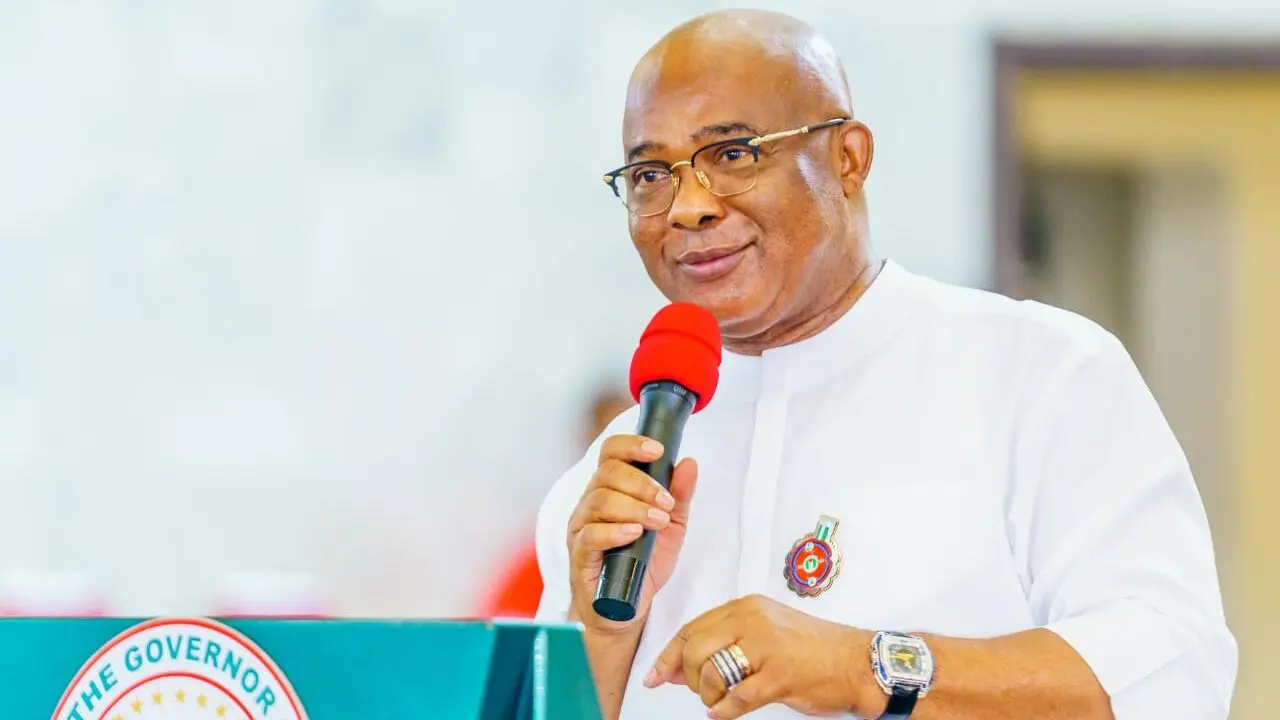
The Governor of Imo State, Hope Uzodinma, has disclosed that the five governors of the Southeast region have resolved to work for the re-election of President Bola Tinubu in 2027.
Naija News reports that Uzodinma made the disclosure while speaking at a meeting with the Imo State Elders Council and traditional rulers in Owerri.
According to him, the decision to support Tinubu’s second term bid irrespective of political differences was influenced by what he described as the President’s unprecedented commitment to the development of the region through landmark infrastructure and economic initiatives.
He argued that the administration of President Tinubu has delivered tangible dividends of democracy to the region, stating that evidence of federal intervention across the zone was visible.
“We, the five governors of the South-East, have reviewed all options and decided that we will work with President Bola Tinubu because we want to be part of the Project Nigeria,” Uzodimma said.
The Governor hinted that the governors would soon pay a joint courtesy visit to President Tinubu to further strengthen their partnership with the Federal Government.
According to him, President Tinubu addressed a long-term request by establishing the South East Development Commission (SEDC), a demand that had remained unmet since the end of the civil war.
He added that President Tinubu signed the South East Development Commission Act into law on July 24, 2024, inaugurated its governing board in February 2025, and ensured that the commission commenced operations with funding.
Governor Uzodinma also highlighted the rehabilitation and commencement of commercial operations on the Port Harcourt–Aba rail line, describing it as the first practical step towards reconnecting the South-East to the national rail network.
Uzodimma further praised the President’s approval of a $3 billion reconstruction of the Eastern Rail Corridor stretching from Port Harcourt through the South-East to Maiduguri, saying the project would significantly boost commerce and regional integration.
On road infrastructure, the governor commended the Tinubu government for executing the Phase 2A and 2B access roads to the Second Niger Bridge, including the dual carriageway linking Umunya, Ogbunike, Ogidi, Nkpor and Asaba, with seven bridges along the corridor.
He also referenced the approval of the 108-kilometre Otuocha–Anam–Abaji Road and the 150-kilometre Oba–Nnewi–Uga–Ihube/Okigwe Junction Road, projects he said would strengthen economic connectivity between Anambra, Imo, Abia and other parts of the country.
Uzodimma argued that beyond projects specific to the South-East, the region had equally benefited from national policies of the Tinubu administration, including increased allocations to states, student loan programmes, improved security efforts, and fiscal reforms aimed at reducing the cost of doing business.
“The South-East has decided. Our people judge governments by performance and not by political sentiments. The evidence is on the ground,” he said.


