
Those Selling Alcohol Needs To Be Licensed – Lawyer
 Follow on Google News
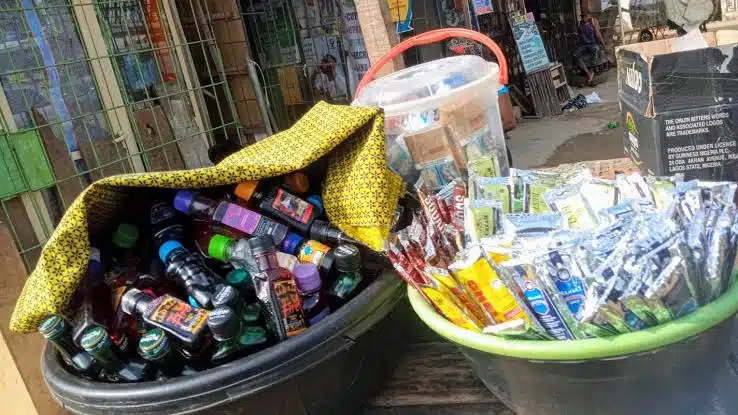
A legal practitioner, Liborous Oshoma, has argued that the Federal Government’s plan to ban sachet alcohol is insufficient to curb alcohol abuse in the country unless strict measures are put in place to regulate both sellers and buyers.
Oshoma made this known on Tuesday during an interview on Arise Television, as the deadline for the enforcement of the sachet alcohol ban draws closer.
The comments come amid preparations by the National Agency for Food and Drug Administration and Control (NAFDAC) to commence full enforcement of the ban on the production and sale of alcoholic beverages packaged in sachets and small bottles below 200 millilitres.
NAFDAC had announced that the policy, which targets the widespread consumption of cheap alcohol, would soon be fully implemented nationwide.
Reacting to the development, Oshoma stressed that banning sachet alcohol without addressing the larger issue of regulation would amount to little or nothing.
He said, “Those who can sell need to be licensed also; if anybody can just sell, licensed or not, then anyone can buy and consume without due process.”
According to him, the ease with which alcohol is sold across the country remains one of the major problems fueling abuse.
The lawyer further noted that Nigeria’s major problem is not the absence of policies but the failure to enforce them effectively.
He said, “And then also it is not just enough to say we have banned, because the problem with us as a people is not policies. It is the implementation of the policy.”
Oshoma added that for the ban to be effective, authorities must ensure that only licensed vendors are allowed to sell alcohol and that the sales process is properly monitored.
Oshoma commended NAFDAC for its firm stance, citing its previous actions against illegal pharmaceutical dealers as a positive example.
He said, “Government is a collaborative effort. I believe, like not too long ago, we saw how NAFDAC had consistently broken down the neck of pharmaceutical dealers in Lagos to say, Look, this environment is not conducive for selling pharmaceutical products.”
He added, “I like the fact that NAFDAC is adamant and they have decided to go headlong. I like that fact.”
Oshoma maintained that proper regulation of alcohol sales is crucial, warning that people would continue to access alcohol even after the sachet ban if enforcement remains weak.
He said, “There’s a need to know people who can afford drinks and those who can sell. Because the problem actually started from the sale of this alcohol.”
He warned that without proper monitoring, consumers could simply switch to bottled alcohol.
“So even if we ban and there is no proper regulation, people can still buy, even in bottles, and consume,” he said.
The legal practitioner also acknowledged NAFDAC’s ongoing efforts to combat fake and substandard alcoholic beverages in the market.
He said, “NAFDAC has consistently done a whole lot trying to also regulate fake drinks in the market. We’ve seen them go into markets to destroy production of fake drinks.”
Oshoma concluded that without strict enforcement and proper regulation of sellers, the sachet alcohol ban may fail to achieve its intended goals.
![No Alcohol, Danger To Life - Tinubu Flags Off Eyo Festival [Video/Photos]](https://www.naijanews.com/wp-content/uploads/2025/12/Tinubu-dancing.jpg)
No Alcohol, No Danger – Tinubu Flags Off Eyo Festival [Video/Photos]
NAFDAC Sends Message To Alcohol Consumers, Reveals Substance That Could Cause Permanent Blindness
Saudi Arabia Reportedly Moves To Grant Conditional Approval For Alcohol

I Have Two Bars In My House Because Of My Love For Alcohol – Iyabo Ojo
Niger Govt To Ban Sale, Consumption Of Alcohol In Suleja

