
Bwala Reveals Why Impact Of Tinubu’s Reform Is Slow
 Follow on Google News
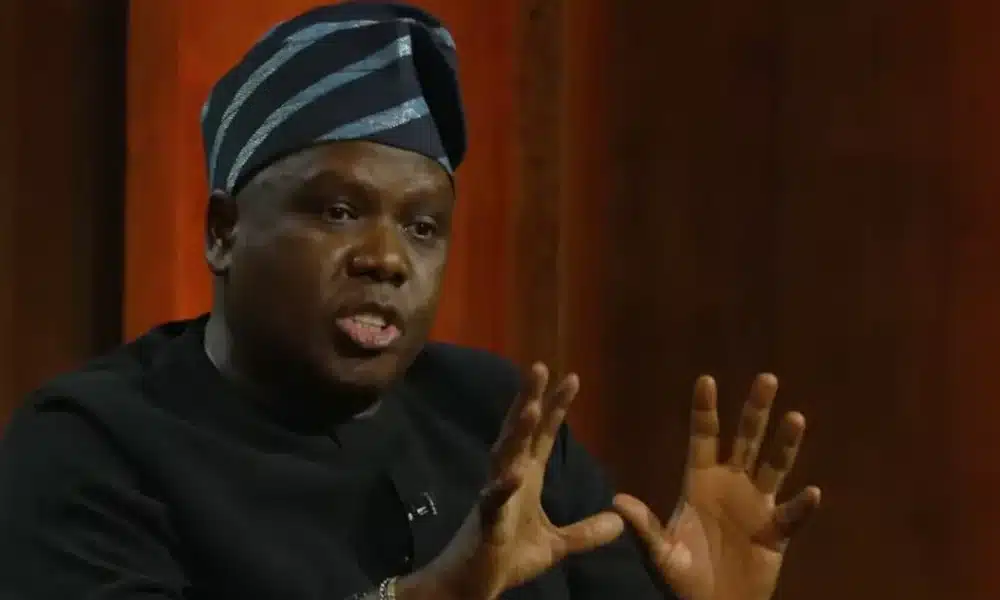
The Special Adviser to President Bola Tinubu on Media and Policy Communication, Daniel Bwala, has said the impact of the administration’s economic reforms is slow because of Nigeria’s large population and major infrastructure deficit.
Bwala said although government revenue had improved, available resources were still not enough to meet the needs of more than 230 million Nigerians and close long-standing infrastructure gaps.
Naija News reports that Bwala spoke on Tuesday during an interview on Arise News.
According to Bwala, the scale of Nigeria’s population means that citizens may not immediately feel the full benefits of ongoing reforms.
Bwala said, “The answer is simply population and resources. The population is over 230 million. The resources we have, however, even with the increased revenue, are not enough to match the population and the deficit in terms of infrastructure. So, growth will inevitably be slow, but it will be slow, steady, and consistent.”
‘States Getting Higher Allocations’
Bwala said the effects of the Federal Government’s policies were already visible through increased allocations to state governments.
He argued that the higher allocations had improved governance and development projects across the country.
“When you talk about the increased revenue, the effect of that increased revenue is the higher allocation to states, which has resulted in state administration improvements and has also impacted the people,” he stated.
He, however, declined to compare states, saying his focus was on the Federal Government’s policies.
“I am actually not here to start talking about state versus state because it would take away from my job description, which is to talk about what the federal government is doing, the concomitant effect of which is seen in the states,” he said.
The presidential aide listed the Nigerian Education Loan Fund, Compressed Natural Gas transportation programme and healthcare interventions as examples of policies designed to support low-income citizens.
He said the administration’s student loan programme was helping children from poor homes access education.
“When we talk about over one million beneficiaries of the Student Loan Fund, these are not children of the rich; these are children of the poor. Without the intervention in this regard, they may not have had the opportunity to achieve their dreams,” he said.
Bwala added that the CNG initiative, dialysis subsidy and support for Caesarean section procedures were also targeted at vulnerable Nigerians.
“Every policy introduced by this government has the poor as its direct beneficiaries,” Bwala maintained.
On poverty reduction, Bwala said the success of government policies should be assessed with data, not perception alone.
He admitted that macroeconomic gains often take time to translate into better living conditions for households.
“The argument most people make is that the administration appears to be too focused on macroeconomic indicators… They are not focused enough on household economics. I think that it is the argument—so you are celebrating numbers while citizens are counting their losses. That’s a fact,” he said.
He, however, insisted that limited resources, population pressure and infrastructure gaps remained major factors slowing the pace of poverty reduction despite ongoing reforms.

2027: It Would Be Evil To Vote Against Tinubu Because He Is Our In-law – Delta Gov

We Are Not Here To Beg You, Just Do Your Job – Sowore Blasts Tinubu

I Am Distressed, My Father Was A Primary School Teacher – Makinde Laments

Tinubu Returns To Abuja After Sallah Break (Video)

Tinubu To Deliver Presidential Broadcast, Address NASS On June 12

