
 Follow Us On Google

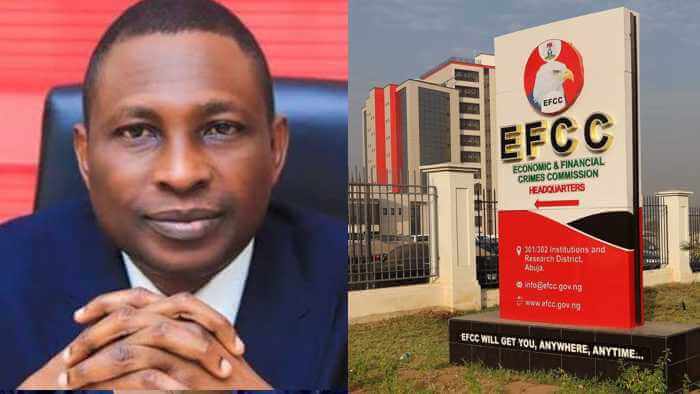
A Nigerian-American forensic psychologist and criminal justice expert, Professor John Egbeazien Oshodi, has told critics of the Economic and Financial Crimes Commission (EFCC) that allegations of selective prosecution should not stop the agency from pursuing cases where credible evidence exists.
“A crime remains a crime,” Oshodi said in a commentary on Monday, according to a statement from the EFCC, arguing that suspected wrongdoing did not become lawful simply because another suspected offender had not been investigated or prosecuted.
Naija News reports that Oshodi commented while assessing the EFCC’s anti-corruption efforts, including its reported recovery and forfeiture of cash and assets worth more than $500 million to the Federal Government. He recalled that EFCC Chairman Ola Olukoyede disclosed the figure during his presentation at the 43rd Cambridge International Symposium on Economic Crime in the United Kingdom.
The professor said the reported forfeiture was part of a broader pattern involving professional investigation, asset tracing, forensic capacity, preventive frameworks, international cooperation, whistleblower participation, legal procedure and the development of young officers.
He acknowledged concerns over selective enforcement but said such concerns should not be dismissed or used to stop the EFCC from acting on credible evidence. He said law-enforcement agencies must remain alert to political pressure, personal influence, unequal treatment and unconscious bias.
Oshodi said the proper response was for all credible allegations to receive the same seriousness, professional independence and respect for due process.
He also praised the EFCC’s emphasis on due process in asset recovery, saying the commission must operate within the law while pursuing suspected proceeds of crime.
He cited the case involving properties allegedly linked to former Attorney-General of the Federation and Minister of Justice, Abubakar Malami, saying EFCC investigators had traced 57 properties allegedly connected to the former minister.
According to Oshodi, a Federal High Court ordered the final forfeiture of 48 of the properties but declined to order the forfeiture of nine others after finding that the EFCC had not sufficiently established their connection to unlawful activity.
He said the different outcomes demonstrated the importance of judicial oversight, with the EFCC responsible for investigating and presenting evidence while courts determine whether the legal requirements for forfeiture have been met.
Oshodi said the commission’s reported consideration of an appeal over the properties not forfeited was the appropriate way to challenge a decision it considered legally incorrect.
The professor also urged the EFCC to remain accountable, warning against selective enforcement, political pressure, unlawful detention, mistreatment of suspects, compromised evidence, careless public statements and avoidable investigative failures.
He described Olukoyede as a “man of integrity” and said the EFCC chairman was strengthening professional systems, developing young officers, recovering public assets, promoting preventive measures and building public confidence in lawful anti-corruption enforcement.
“Olukoyede is building more than cases. He is building professional capacity. He is building young officers. He is building preventive systems. He is building public awareness. He is building confidence in lawful anti-corruption enforcement,” Oshodi said.
He said Olukoyede appeared focused on strengthening the institution rather than his personal visibility.
“He does not appear interested in presenting himself as a solitary national hero. Instead, he consistently directs attention toward the institution, its mandate, its personnel, and the systems required to combat sophisticated financial crimes,” Oshodi said.
Oshodi argued that Nigeria needed strong, professional, transparent and enduring institutions rather than personality-driven leadership.
According to him, the true measure of Olukoyede’s leadership would not be how frequently his image appeared in the media but whether the EFCC became “more capable, professional, impartial, transparent, and resilient” because of his tenure.
He said a leader who concentrated on personal influence could make an institution dependent on his presence, while an institution builder would strengthen procedures, develop personnel, transfer knowledge and establish professional standards capable of surviving beyond his tenure.
“A personality may dominate a moment; a strong institution can protect generations,” he said.
Oshodi said investment in young investigators and professionals was central to building a stronger EFCC. He said the agency needed officers trained in asset tracing, forensic accounting, cybercrime investigation, digital evidence, cryptocurrency, intelligence analysis, corporate structures and international cooperation.
He added that professionalism should not be measured solely by the number of arrests made, but also by the quality of investigations, reliability of evidence, treatment of suspects and witnesses, strength of cases presented in court and officers’ willingness to resist corruption and improper pressure.
The professor also supported Olukoyede’s emphasis on prevention, arguing that Nigeria could not “arrest its way out of corruption.”
He said enforcement remained necessary, but preventing corruption required stronger procurement systems, beneficial-ownership information, meaningful audits, suspicious-transaction reporting, digital financial records and effective internal controls.
Oshodi further commended Olukoyede’s call for stronger whistleblower protection and public participation in recovering assets allegedly taken abroad.
He said the EFCC could not fight sophisticated financial crimes alone and would require cooperation from banks, professionals, civil servants, journalists, international partners and ordinary citizens.
Oshodi said recognising Olukoyede as a man of integrity should not place the chairman or the commission beyond scrutiny. He said the strongest test of Olukoyede’s leadership would be whether the EFCC could continue operating professionally and effectively after his tenure.
“The true test of Olukoyede’s leadership will not be whether the EFCC remains dependent upon him. It will be whether the Commission can continue operating professionally and effectively after he is gone,” he said.
Oshodi concluded that Olukoyede’s most enduring legacy would not be his public profile but whether the EFCC emerged from his tenure as a stronger, more professional, transparent, impartial and resilient institution.
“Let the world know that a man of integrity is doing difficult work in very difficult terrain,” he said.
“Let it know that he is not merely occupying an office; he is trying to strengthen it.”





Join the conversation
Comments
Want to discuss? Please read our Commenting Policy first.