
‘Nigeria May Miss 2030 World Cup’
 Follow on Google News

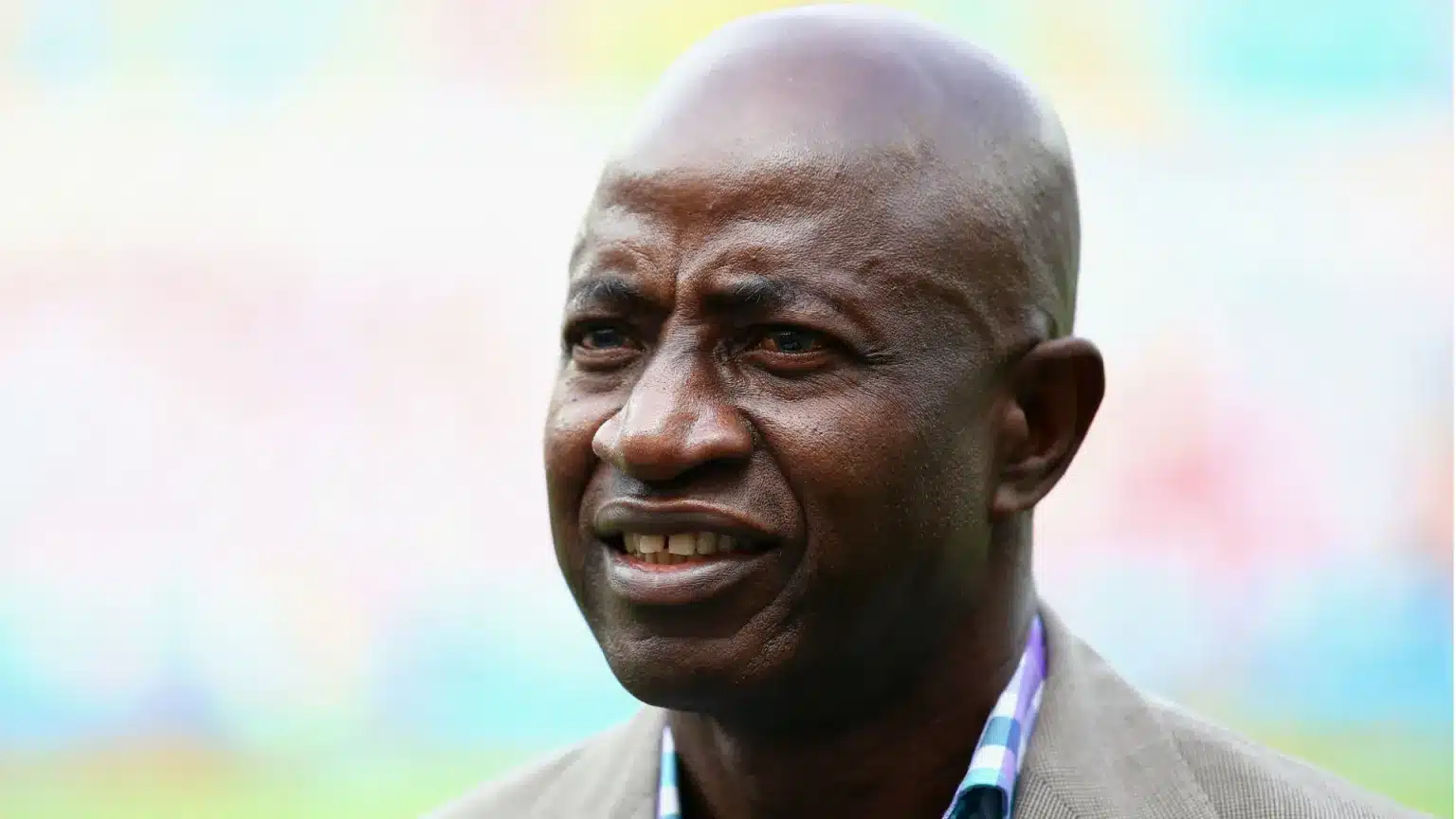
Former Nigeria international, Segun Odegbami, has renewed his call for a total overhaul of the Nigeria Football Federation following the Super Eagles’ failure to qualify for the 2026 FIFA World Cup.
The tournament, co-hosted by the United States, Mexico and Canada, has continued to attract global attention as 48 national teams compete for football’s biggest prize.
But for many Nigerians, the excitement has been dampened by the absence of the Super Eagles, who failed to qualify for a second consecutive World Cup.
Stakeholders and former footballers have blamed the setback on years of poor administration, mismanagement, delayed player bonuses, unstable coaching appointments and the collapse of youth development structures.
They warned that unless the NFF is overhauled and depoliticised, Nigeria’s vast football talent may continue to suffer on the global stage.
Government Must Act – Odegbami
Odegbami, popularly known as “Mathematical” during his playing days, said Nigeria’s absence from the World Cup should be treated as a national emergency.
According to him, the country’s football crisis goes beyond results on the pitch and reflects deep-rooted failure in the administration of the sport.
“The government must act,” he said.
He added, “It’s not an Odegbami project, it’s a national call to save our football from the stranglehold of scavengers who have nothing to offer other than what they grab in the process. If people decide to peep from the window, I’ll go all the way.”
The former Green Eagles star said qualification for the World Cup should be the minimum expectation for a country with Nigeria’s pedigree, population and pool of football talents.
He vowed not to relent until those he described as having overstayed at the Football House were removed through legitimate reforms.
Odegbami said he would continue to push for changes to the NFF statutes to ensure that current administrators could be voted out in the next elections.
Nigeria’s failure to qualify also came with heavy financial implications.
The country missed out on at least $10.5m in FIFA participation and preparation funds, an amount estimated at over N15.5bn and said to represent a significant portion of the NFF’s projected annual budget.
Beyond the FIFA funds, stakeholders said the country also lost sponsorship opportunities, broadcast revenue, global exposure for players and economic benefits connected to the World Cup.
They argued that such funds could have supported grassroots football, youth development and the rehabilitation of sporting infrastructure across the country.
Stadium Decay Worries Stakeholders
Concerns were also raised over the state of football infrastructure in Nigeria.
Despite having over 30 stadiums across the country, many have suffered years of neglect and poor maintenance.
The National Stadium in Surulere, Lagos, remains in disrepair, while the Teslim Balogun Stadium requires constant maintenance to meet certification standards.
The Godswill Akpabio International Stadium in Uyo, often regarded as one of the country’s best football venues, is also said to be losing its beauty and functionality due to overuse.
Stakeholders argued that proper leadership and accountability in football administration could have helped channel FIFA funds and sponsorship revenue into maintaining world-class facilities.
A former Minister of Sports, Solomon Dalung, also blamed entrenched interests for the problems affecting Nigerian football.
He said the rot in the system had existed for decades and remained largely unaddressed because some administrators benefit from failure.
Dalung recalled an encounter with an elderly man who told him, “In sports, we work harder for failure than for success.”
According to him, tournament budgets were often prepared up to the final stage, but administrators allegedly benefited more when teams exited early because unspent funds were rarely accounted for.
He said his attempts to demand accountability while in office were often misrepresented as ministerial interference.
Wike Fumes Over Super Eagles’ Absence
The Minister of the Federal Capital Territory, Nyesom Wike, also expressed frustration over Nigeria’s failure to qualify for the tournament.
Speaking during the commissioning of the Gwagwalada-Kuje Road project, where former Super Eagles captain Joseph Yobo was present, Wike said Nigerians were unhappy about the country’s absence from the World Cup.
“Yobo, go and tell them. We are not happy,” Wike said.
His comment was welcomed by football fans who said government officials had largely remained silent despite the national disappointment.
Some former players have also called for greater involvement of ex-internationals in football politics.
The Chairman of the Anambra State Football Association, Chikelue Iloenyosi, urged former footballers to participate more actively in football governance if they want to influence decision-making.
Another ex-international, Austin Popo, also called for unity among former players.
“This is the time for us to close ranks and save Nigerian football,” Popo said.
Fear Over 2030 World Cup
Stakeholders warned that Nigeria risks missing the 2030 FIFA World Cup if urgent reforms are not carried out.
They said football administration must be driven by competence, transparency and accountability rather than politics and personal interests.
They also called on the government, football stakeholders and the wider football community to work together to restore integrity to the sport and rebuild the structures that once made Nigeria a major force in African and global football.
They warned that failure to act now could deepen the crisis and leave the Super Eagles absent from another World Cup, a situation they said would be unacceptable for a country that once prided itself as one of Africa’s football powerhouses.
Author:

Messi Sets World Cup Record As Argentina Edge Cape Verde

18 Historic Records As Messi, Ronaldo, Kane Shine At 2026 World Cup
Three Die As Mexico Celebrates World Cup Win Over Ecuador
2026 World Cup: List Of Eliminated Teams From Each Continent So Far

South Africa Coach Hugo Broos Delays Resignation Decision
