
Obidient Movement Alleges Plot To Stop Obi’s 2027 Bid, Accuses Judiciary Of Bias
 Follow on Google News
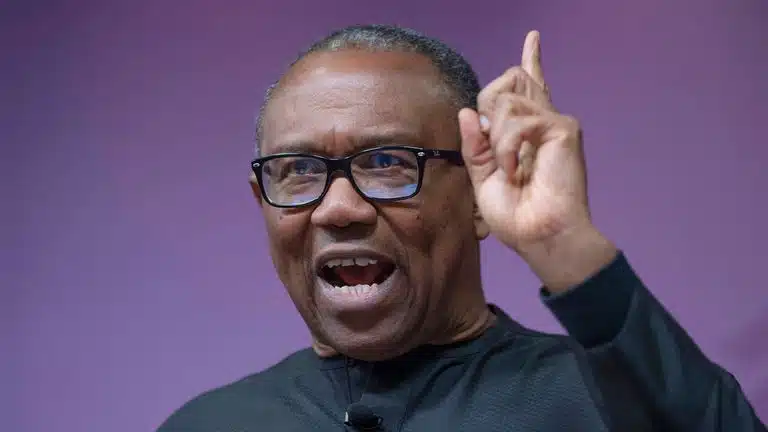
The Obidient Movement on Monday accused the Federal Government of using the judiciary to frustrate the political ambitions of its principal, Peter Obi, alleging that recent court decisions affecting the Nigeria Democratic Congress were part of a broader plan to prevent him from contesting the 2027 presidential election.
At a press conference tagged “The Road to Anarchy,” the group described the court ruling on the status of the NDC as a “dangerous judicial pronouncement” and claimed it reflected what it called the “weaponisation of justice” against opposition parties.
Group alleges coordinated attack on opposition
Speaking on behalf of the movement, the group’s national coordinator, Yunusa Tanko, alleged that the legal action against the NDC was instituted shortly after Obi joined the party.
According to him, “Just three days after Nigeria’s incoming president, Mr Peter Obi, joined the NDC, a fictitious case was filed to deregister the party.”
He alleged that the development was orchestrated to stop Obi from appearing on the ballot in the 2027 presidential election.
“This is a hatched job by the present administration to ensure that our principal, Mr Peter Obi, is not on the ballot in 2027,” he said.
The group insisted it would resist any attempt to prevent Obi from contesting the election through legal or political means.
Judiciary accused of losing independence
The Obidient Movement also accused the judiciary of abandoning its constitutional role as an impartial arbiter.
“The Nigerian judiciary is actively surrendering itself to the dictates of the APC regime. It is no longer behaving as an impartial guardian of justice,” the spokesperson alleged.
He warned that continued erosion of public confidence in the courts could have serious consequences for the country’s democracy.
“When you destroy the court of law, you leave the people with only the court of public opinion and the streets,” he said.
Warns against shrinking democratic space
The movement further accused the government of attempting to suppress opposition parties through legal and institutional means, insisting that Nigerians alone have the constitutional right to determine who leads the country.
It argued that any attempt to deny citizens genuine electoral choices could deepen political tensions ahead of the next general election.
The group urged supporters across the country not to be discouraged but to continue participating in the electoral process by obtaining their Permanent Voter Cards.
“Keep your eyes on the ball. Peter Gregory Obi is becoming the presidential candidate of the NDC,” one of the speakers said.
The movement maintained that the 2027 election must remain competitive and should not become what it described as a one-party affair.
Legal team moves to challenge judgment
Responding to questions from journalists, an NDC representative said the party had already approached the court to challenge the judgment.
He disclosed that the legal team would seek an accelerated hearing and a stay of execution while the appeal is being determined.
“As of today, our party is diligently and competently in court to challenge the judgment. We have assembled some of the most intelligent lawyers and we are asking for accelerated hearing and a stay of execution,” he said.
APC, INEC accused of undermining democracy
During the briefing, speakers also accused the ruling All Progressives Congress of compromising democratic institutions, including the Independent National Electoral Commission, the judiciary and security agencies.
They alleged that the democratic space was being deliberately narrowed to weaken opposition parties ahead of the next election.
The movement, however, insisted that Obi would remain on the 2027 ballot and vowed to continue challenging any action it deems unconstitutional through lawful means.
Calls on Nigerians to remain engaged
The group concluded by urging Nigerians to defend democracy and remain active in the electoral process.
It also appealed to the media and civil society organisations to continue holding those in power accountable while insisting that political competition should be determined by voters rather than the courts.

Stay In NDC, Fight – Sambo Urges Peter Obi

‘Mischievous Deceit’ – Presidency Fires Back At Peter Obi Over Asaba–Benin Highway Project

Rufai Oseni ‘Exposes’ Orchestrated Plot Behind NDC Deregistration After Peter Obi’s Entry

Stop Building New Roads – Peter Obi Tells Nigerian Gov’t

He Has Four Different Names – Arabambi Accuses Obi Of Having Inconsistent Official Records
