
Normalisation Of Corruption Is Real Danger Facing A Nation – Bode George
 Follow on Google News

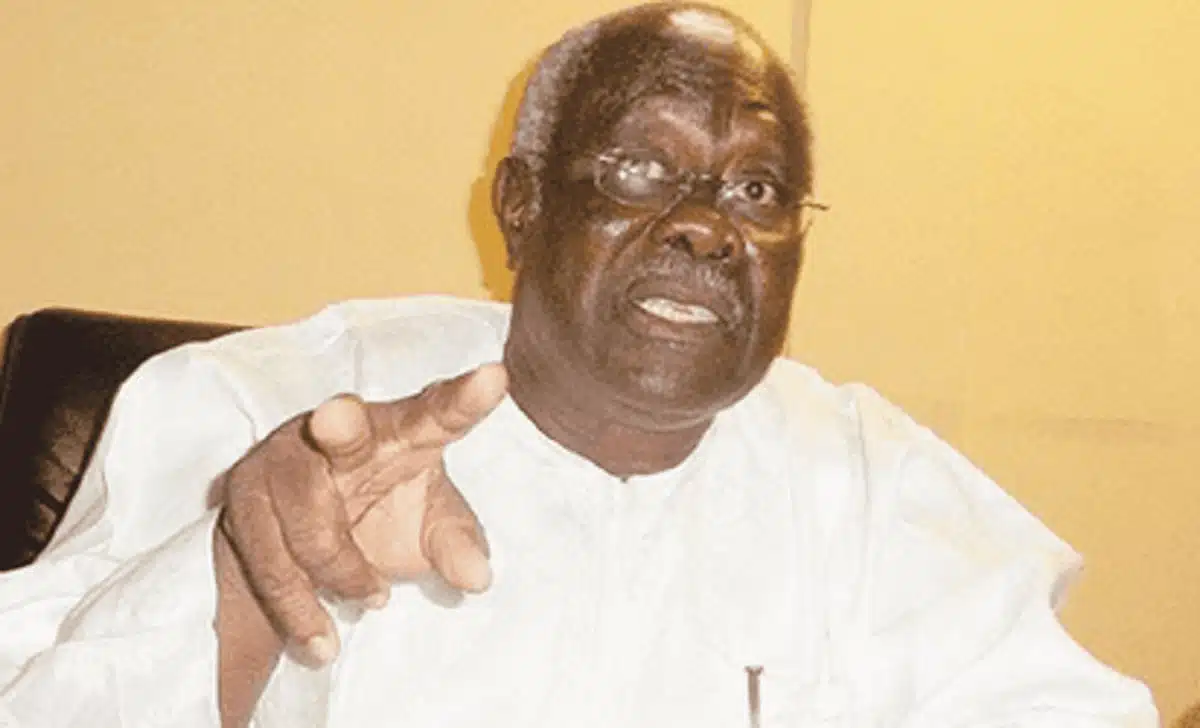
Elder statesman and former deputy national chairman of the Peoples Democratic Party (PDP), Bode George, has lamented over the strain on Nigeria’s democratic institutions.
He warned against the trend of treating opposition voices as enemies rather than participants in the democratic process,
Naija News reports that George shared his reservations during the memorial lecture to mark Herbert Macaulay’s posthumous birthday in Lagos.
He argued that the strength of a democracy is not measured by the power of those who govern but by the strength of the institutions that restrain power.
George said, “The strength of a democracy is not measured by the power of those who govern. It is measured by the strength of the institutions that restrain power. For democracy survives on confidence. Confidence in the rule of law. Confidence in the impartiality of institutions. Confidence that justice will neither be delayed nor denied. Confidence that public authority will always remain subject to constitutional restraint. Once citizens begin to lose confidence in institutions, the foundations of democratic governance begin to weaken.
“History offers a warning that no serious democracy should ignore the following: When political competition weakens, democracy weakens; when institutions cease to be visibly impartial, democracy weakens; when opposition voices are treated as enemies rather than participants in the democratic process, democracy weakens; and when citizens begin to believe that political outcomes are predetermined, public confidence suffers.
“No patriot should desire a Nigeria in which democratic choice becomes an illusion. No patriot should desire a Nigeria in which institutions are viewed through partisan lenses. No patriot should desire a Nigeria where the concentration of power becomes a substitute for democratic legitimacy. Governments come and go. Political parties rise and fall. Presidents come and go. But institutions must endure. For when institutions are weakened, nations suffer. When justice is perceived to be selective, public confidence suffers. When power ceases to recognise restraint, democracy itself comes under pressure.
“History teaches us that nations rarely lose their way suddenly. They lose their way when corruption becomes normal. When injustice becomes acceptable. When power becomes more important than principle. When citizens become indifferent to the gradual erosion of the values upon which great nations are built. The real danger facing a nation is not merely corruption. It is the normalisation of corruption. The real danger is not merely injustice. It is the acceptance of injustice. The real danger is not merely the abuse of power. It is the silence of good people in the face of abuse.”

Wabara, Babangida, Jerry Gana, Bode George, PDP BoT Drags INEC To Court
Direct Your Advice To Tinubu, Not Service Chiefs – Bode George Tells Pastor Adeboye
Wike’s PDP Faction Suspends Bode George, 23 Others In Lagos
Before El-Rufai’s Mother Died People Were Playing Politics With His Bail – Bode George

Rivers: Bode George Reacts As Wike ‘Appoints’ APC, PDP Governorship Candidate