
Crude Oil Prices Fall Amid Optimism Over US-Iran Negotiations
 Follow on Google News
Crude oil prices fell on Monday, June 22, as investors welcomed signs of progress in talks between the United States (US) and Iran, with mediators announcing a roadmap towards a final agreement.
The development eased fears of further disruption in the Middle East, particularly around the Strait of Hormuz, a key waterway through which about a fifth of global oil and gas passes.
Both main oil contracts dropped in afternoon Asian trade, with Brent crude falling more than one per cent.
West Texas Intermediate crude was down 0.6 per cent at $75.37 a barrel, while Brent North Sea crude fell 1.7 per cent to $79.19 a barrel.
Naija News reports that the negotiations, initially scheduled for Friday, were postponed due to fighting between Israel and Hezbollah.
They later got underway on Sunday in Switzerland, with teams led by US Vice President JD Vance and Iran’s Mohammad Bagher Ghalibaf.
There were earlier concerns after reports suggested that Iran had called off the talks following US President Donald Trump’s threat to launch more strikes if Hezbollah continued attacking Israel.
However, mediators Pakistan and Qatar said the discussions were held in “a positive and constructive atmosphere”.
The mood in the markets improved after Qatar and Pakistan announced progress in the negotiations, which are aimed at addressing Tehran’s nuclear programme and reopening the Strait of Hormuz.
The mediators said the United States and Iran had agreed to establish a “communication line” to prevent incidents in the crucial waterway.
They added that “the High Level Committee has agreed upon a roadmap towards reaching a final deal within 60 days, laying the foundation for the immediate commencement of further technical talks”.
Iranian Foreign Minister Abbas Araghchi also said on X that “mediation has delivered major progress to end the Lebanon War.”
Stock markets were mixed after a broadly positive start to trading.
Tokyo, Seoul and Taipei recorded gains, helped by another strong performance from technology stocks. Markets in Shanghai, Mumbai and Bangkok also advanced.
However, Hong Kong, Sydney, Singapore, Wellington, Manila and Jakarta fell.
In Europe, London, Paris and Frankfurt opened higher.
“Following the positive response last week to reports of a US-Iran ceasefire, markets are likely to open with a cautious tone to start the new week as it remains clear that the situation in the Middle East remains fragile,” National Australia Bank’s Skye Masters said.
“The dollar is likely to remain supported, the oil price could swing either way, but at current levels the risk is for a lift higher.”
Sterling also remained under pressure after suffering a sell-off following Thursday’s by-election victory by UK Labour politician Andy Burnham.
The result increased expectations that Burnham could replace Prime Minister Keir Starmer, who has come under mounting pressure from Labour MPs.
The Guardian reported that the embattled premier “is expected to announce on Monday that he will step down as prime minister after overwhelming pressure from Labour MPs to make way for Andy Burnham”.
Investors were said to be concerned that Burnham could introduce new spending plans, potentially worsening Britain’s already large debt burden.
Market Figures
Tokyo’s Nikkei 225 rose 1.6 per cent to close at 72,353.96, while Hong Kong’s Hang Seng Index fell 0.4 per cent to 23,822.25.
Shanghai’s Composite Index gained 1.8 per cent to close at 4,163.10, while Seoul’s Kospi rose 0.7 per cent to 9,114.55.
London’s FTSE 100 edged up 0.1 per cent to 10,368.72.
In currency trading, the euro fell to $1.1457 from $1.1464 on Friday, while the pound dropped to $1.3210 from $1.3218.
The dollar rose to 161.72 yen from 161.27 yen, while the euro slipped to 86.72 pence from 86.73 pence.

Iran Coach Ghalenoei Welcomes Eased Travel Rules Ahead Of Egypt Clash
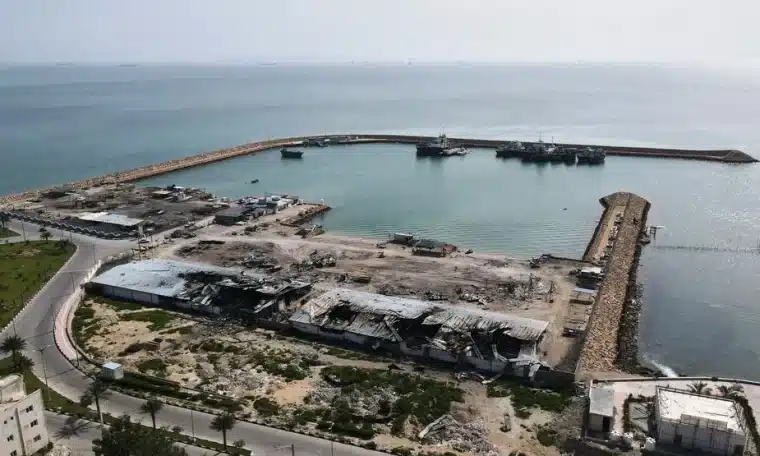
Concerns As Iran Shuts Strait Of Hormuz Again, Suspends Nuclear Talks With US
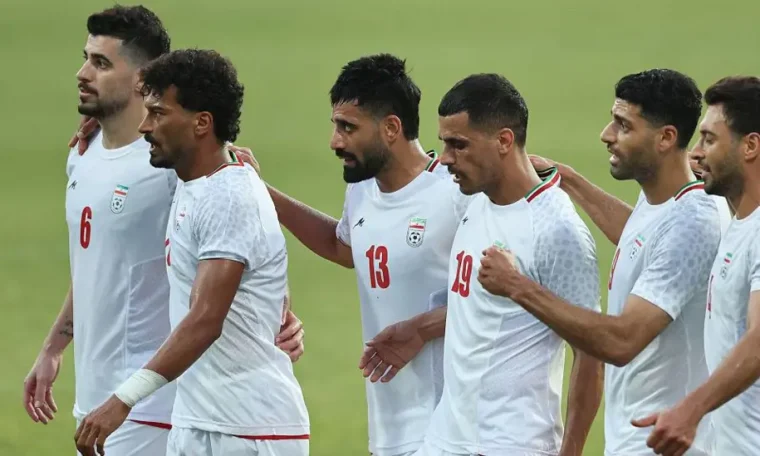
Iran To File FIFA Complaint Over World Cup Travel Restrictions

‘These Fools Think I Was Not Tough Enough’ – Trump Attacks Critics On US-Iran Peace Deal

Nigeria, Africa Need Peaceful World Order – Olawepo-Hashim Hails US-Iran Peace Deal

