
Concerns As FIFA Bans Refillable Water Bottles From 2026 World Cup Venues
 Follow on Google News
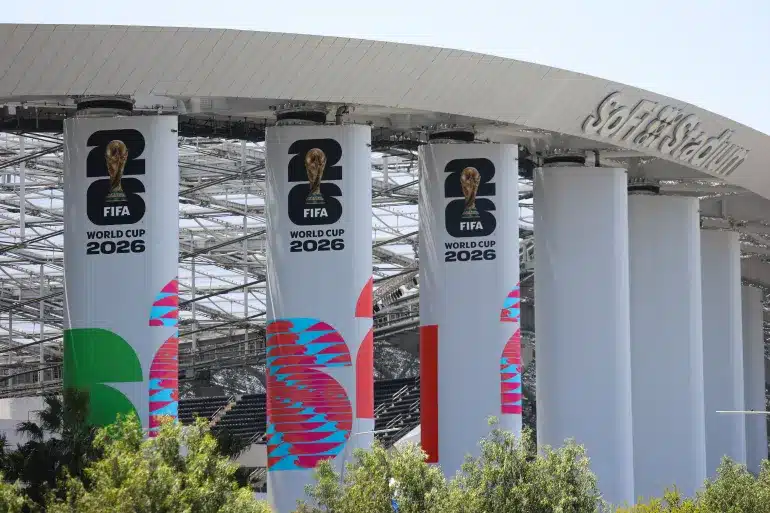
FIFA has banned fans from bringing refillable water bottles into stadiums for the 2026 World Cup, in a late policy change that could force supporters to buy bottled water inside match venues.
Naija News reports that the decision reported by Reuters on Thursday, came barely days before the tournament, which will be co-hosted by the United States, Canada and Mexico.
The development marks a reversal from FIFA’s earlier stadium code of conduct, which had allowed supporters to bring empty, transparent, reusable plastic bottles of up to one litre into venues.
As recently as last month, the rule stated, “For the avoidance of doubt, empty, transparent, reusable plastic bottles, up to (1 liter in) capacity, may be brought into the Stadium.”
The guidelines had now been changed to expressly prohibit refillable bottles.
The updated stadium code of conduct now reads, “For the avoidance of doubt, reusable water bottles may not be brought into the stadium.”
The change means supporters attending matches may have to rely on bottled water sold inside stadiums or use hydration facilities provided around the venues.
The decision has raised fresh concerns, especially with several matches expected to be played in hot weather conditions across open-air stadiums.
FIFA Cites Safety Concerns
Also, in a statement to AFP, a FIFA spokesperson said the decision was taken on safety grounds.
The spokesperson explained that some World Cup venues had already prohibited outside bottles and that FIFA had decided to apply the same rule across all tournament stadiums.
The statement read, “FIFA is committed to protecting the health and safety of all players, referees, fans, volunteers, and staff.
“FIFA made the decision to prohibit bottles to prevent risk and injury to players and attendees.
“Outside bottles are already prohibited at several of these venues for safety considerations, and FIFA is applying this consideration across its tournament stadiums.”
Hydration Facilities Promised
FIFA said measures would be provided to help fans cope with heat and maintain hydration around stadiums.
The governing body said misting stations, fans, hydration stations and cooling tents would be available within “the stadium footprint.”
It also said bottled water inside venues would be sold at prices that “remain consistent with other events held at each stadium.”
However, the rule change is likely to draw criticism from supporters who may view it as an added financial burden, particularly at a tournament already expected to involve high travel, accommodation and ticketing costs.
The policy change comes despite warnings from experts that fans could face health risks from extreme heat during the World Cup.
According to AFP, a report published last month by the World Weather Attribution research group estimated that 26 of the 104 matches at the tournament are likely to be played in conditions where the Wet Bulb Global Temperature exceeds 26 degrees.
Wet Bulb Global Temperature is a measure of heat stress on the human body, combining temperature, humidity, wind and sunlight.
Concerns over heat were also raised at last year’s FIFA Club World Cup in the United States, where fans complained of searing temperatures.
Supporters were also barred from bringing water bottles into venues during that tournament.

DR Congo Friendly Against Chile Cancelled Over Ebola Concerns

FIFA Names Davido For World Cup 2026 Countdown Concert In Los Angeles

2026 FIFA World Cup: Squad Lists Of All Africa’s 10 Representatives
FIFA Confirms 1,248 Players For 2026 World Cup As Messi, Ronaldo Eye Sixth Appearance

‘Liverpool Defender Ibrahima Konate Agrees Real Madrid Move On Free Transfer’

