
How Tinubu Gov’t Borrowed ₦5.08 Trillion From Bond Market In Six Months
 Make us a preferred source
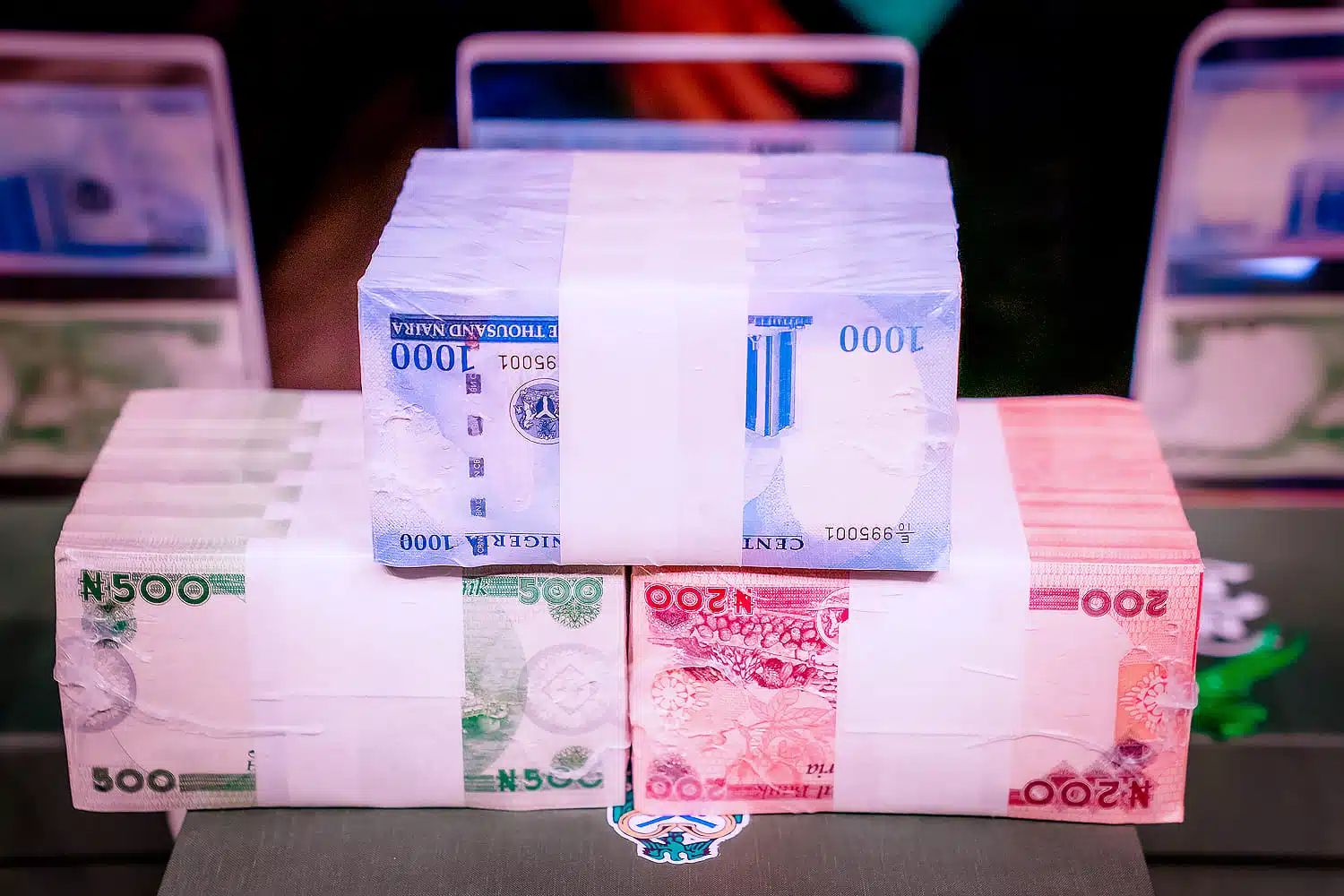
The Federal Government raised ₦5.08 trillion from the domestic bond market in the first six months of 2026, representing a 77.8 per cent increase from the ₦2.86 trillion secured during the corresponding period of 2025.
An analysis of the Debt Management Office’s (DMO) auction results showed that the government raised an additional ₦2.22 trillion from bond investors between January and June 2026, as it intensified its domestic borrowing programme to meet its financing obligations.
Naija News understands that the increase came despite a moderation in the cost of borrowing, with average marginal rates falling below the levels recorded in the first half of 2025.
Investor appetite for Federal Government securities also remained strong, as total subscriptions exceeded ₦9tn during the six-month period.
The auction figures showed that the Federal Government allotted bonds worth ₦5.08 trillion between January and June 2026, compared with ₦2.86 trillion allotted within the same period of 2025.
The totals included competitive and non-competitive allotments disclosed in the DMO’s monthly auction results.
The government also significantly increased the value of bonds offered to investors during the period.
Between January and June 2026, the DMO offered bonds worth ₦4.95tn, compared with ₦1.85tn offered during the corresponding period of 2025.
This represented an increase of ₦3.10 trillion, or 167.6 per cent, and reflected the government’s more aggressive reliance on the domestic debt market.
Investor Subscriptions Exceed ₦9 Trillion
Investors submitted subscriptions worth ₦9.04 trillion in the first half of 2026, up from ₦4.37tn in the same period of 2025.
This amounted to an increase of ₦4.67 trillion, or approximately 107 per cent, indicating sustained demand for Federal Government bonds.
However, demand weakened when measured against the significantly larger amount of securities offered by the government.
Subscriptions represented 236.1 per cent of the amount offered during the first half of 2025 but declined to 182.6 per cent in the corresponding period of 2026.
This suggests that although investors committed substantially more funds to bond auctions, the rise in subscriptions did not keep pace with the rapid expansion in the government’s borrowing needs.
A further analysis of the auction results showed that investors submitted 2,823 bids across all Federal Government bond auctions conducted in the first six months of 2026.
This was an increase from the 1,621 bids submitted during the same period of 2025.
Successful bids also rose from 926 in the first half of 2025 to 1,449 in 2026.
However, the proportion of successful bids fell from 57.1 per cent in 2025 to 51.3 per cent in 2026, indicating that the DMO became more selective in accepting offers despite the increase in investor participation.
January Borrowing Hits ₦1.68 Trillion
The Federal Government’s monthly borrowing profile varied significantly during the six-month review period.
January recorded the highest bond allotment, with ₦1.54tn allotted to competitive bidders.
Total allotments for the month rose to about ₦1.68tn after non-competitive allocations were included, compared with ₦601.04bn raised in January 2025.
June followed with total allotments of ₦1.22tn, significantly higher than the ₦100bn raised in the corresponding month of 2025.
The figure made June one of the strongest months for domestic bond issuance during the review period.
May also witnessed a sharp increase in borrowing, as the government allotted ₦614.51bn through competitive bids.
The total allotment for May rose to ₦894.51bn following the addition of a ₦280bn non-competitive allocation for the 16.2499 per cent FGN April 2037 bond.
This was nearly three times the ₦300.69bn raised in May 2025.
Borrowing was, however, lower in February and April.
The DMO allotted ₦524.28bn in February 2026, down from ₦910.39bn in the corresponding period of 2025.
April allotments also fell to ₦276.79bn from ₦520.90bn recorded during the same month of the previous year.
March was the only other month besides January, May and June to record an increase, with allotments rising from ₦423.68bn in March 2025 to ₦485.50bn in March 2026.
Borrowing Costs Decline
Despite the increase in the volume of bonds issued, the data indicated a decline in the Federal Government’s domestic borrowing costs.
Marginal rates across the various bond instruments ranged from 15.50 per cent to 18.35 per cent during the first half of 2026.
This was lower than the range of 17.75 per cent to 22.60 per cent recorded during the corresponding period of 2025.
The simple average marginal rate across all bond instruments fell to about 16.78 per cent in the first six months of 2026 from approximately 19.84 per cent during the same period of 2025.
Similarly, the allotment-weighted average marginal rate declined from about 20.14 per cent to approximately 17.29 per cent.
The reduction suggests that the government was able to borrow larger amounts at lower average rates compared with the previous year, although yields remained high when measured against historical levels.
2035 Bond Leads Government Fundraising
The 22.60 per cent FGN January 2035 bond emerged as the government’s largest funding instrument during the period under review.
Across four reopening auctions conducted between January and June 2026, the bond attracted subscriptions of about ₦2.30tn and accounted for approximately ₦1.52tn in total allotments.
The 16.2499 per cent FGN April 2037 bond also attracted strong interest from investors.
Although the 20-year instrument was offered only in May and June, it recorded subscriptions exceeding ₦1.24tn and total allotments of approximately ₦1.38tn.
The total was boosted by the ₦280bn non-competitive allocation recorded in May.
Among shorter-tenor instruments, the 19.89 per cent FGN May 2033 bond attracted ₦1.34tn in subscriptions and ₦541.34bn in allotments during three reopening auctions held in February and March 2026.
In contrast, the 19.89 per cent FGN May 2033 bond accounted for the largest share of Federal Government borrowing during the first six months of 2025, raising ₦1.07tn.
It was followed by the 18.50 per cent FGN February 2031 bond, which raised ₦758.90bn during the period.
The figures showed that although the Federal Government substantially expanded domestic borrowing during the first half of 2026, demand for its debt instruments remained strong despite the increased supply.
Foreign Investors Stake $3.23 Billion On Bonds
Reports had indicated earlier that foreign investors invested $3.23 billion in Nigerian bonds during the first quarter of 2026, underscoring a strong appetite for the country’s fixed-income securities.
Data contained in the capital importation report released by the National Bureau of Statistics (NBS) showed that bond investments accounted for 32.71 per cent of the $9.86bn portfolio investments recorded during the quarter.
The investment also represented 31.10 per cent of the total $10.37bn capital imported into the country within the period.
The $3.23bn bond inflow marked a 267.67 per cent increase from the $877.41m recorded during the corresponding period of 2025.
It was also 63.76 per cent higher than the $1.97bn attracted in the preceding quarter.
The increase reflected the continued attractiveness of Nigerian sovereign debt instruments, which offered some of the highest returns across emerging and frontier markets.
The high yields followed the aggressive monetary tightening programme undertaken by the Central Bank of Nigeria over the past two years.
Since assuming office in September 2023, CBN Governor Olayemi Cardoso has led the Monetary Policy Committee through one of the most aggressive interest-rate tightening cycles in the country’s history.
The MPC raised the Monetary Policy Rate from 18.75 per cent to a peak of 27.50 per cent through a series of increases in 2024.
The measures were designed to curb inflation, stabilise the naira and restore investor confidence in the Nigerian economy.
After retaining the benchmark rate at 27.50 per cent for most of 2025, the committee began a cautious easing cycle in September of that year.
It reduced the MPR by 50 basis points to 27 per cent as inflation moderated over several consecutive months, before lowering it further to 26.50 per cent in early 2026.
At its 305th meeting in May 2026, the MPC retained the benchmark interest rate at 26.50 per cent and left other major policy parameters unchanged.
It attributed the decision to renewed inflationary pressure linked to disruptions in the global energy market, while stressing the need to preserve the gains recorded from the earlier tightening cycle.
Borrowing Crowding Out Businesses – Economist
The Chief Executive Officer of the Centre for the Promotion of Private Enterprise, Dr Muda Yusuf, warned that the Federal Government’s increasing reliance on domestic borrowing was crowding out the private sector.
In a chat with The PUNCH, Yusuf noted that commercial banks are increasingly favouring low-risk, high-yield government securities instead of extending loans to businesses and other operators in the real sector.
“The increase in credit to the government can be attributed to a number of factors. The government has been raising money to finance the deficit.
“So, this financing of the deficit has led to the issuance of bonds, treasury bills, and so on, which banks also buy. The rate is also very attractive, and it’s more attractive to them than lending to the real sector,” Yusuf said.
The economist urged the government to moderate its borrowing to prevent the growing public sector demand for funds from limiting credit available to private businesses.
Yusuf further said the attractive returns on government securities were helping Nigeria draw foreign portfolio investors but were also significantly increasing the country’s debt-servicing burden.
He said, “It’s helping us to attract portfolio investment, but it’s creating a huge burden of debt service. We have to balance those two objectives.
“We have to improve portfolio flows, but it’s costing us a lot in terms of our domestic borrowing and debt-servicing costs.”
Yusuf described the interest rates offered on government bonds and treasury instruments as excessively high and called for stronger coordination between the country’s fiscal and monetary authorities.
He argued that the government should reduce its dependence on debt-funded infrastructure projects by expanding the use of public-private partnerships.
According to him, commercially viable infrastructure projects should be identified and offered to private investors rather than being funded entirely through additional government borrowing.
Market analysts have predicted that any major decline in Federal Government bond yields is unlikely before the final quarter of 2026.
This means fixed-income investors may have to prepare for a prolonged period of relatively high interest rates.
In its June 2026 Economic Note, Coronation Asset Management said sticky inflation, restrictive monetary policy and increasing fiscal pressure would keep bond yields elevated during the third quarter of the year.
“We expect FGN bond yields to remain elevated through Q3 2026, with limited scope for a near-term reversal of the June repricing,” the firm said.
Ahead of the July bond auction, the analysts said market yields appeared to have established a new baseline that would be difficult to reverse without a clear improvement in economic indicators.
“Our base case is that marginal rates hold in a 17.5-19.0 per cent band on long-dated re-openings into the July auction, conditional on the MPC maintaining its hold at the 20-21 July meeting and inflation prints remaining sticky in the mid-teens,” Coronation Research stated.
The firm warned that risks remained tilted towards higher yields should macroeconomic conditions deteriorate in the coming weeks.
“Upside risk would come from a fourth straight inflation uptick, a weaker naira, or another large NTB auction ahead of the next bond sale,” it added.
Coronation said the possibility of a significant decline in yields remained constrained by the monetary policy timetable of the Central Bank of Nigeria.
“Downside risk would require a clear, sustained lower inflation print or an MPC easing signal, neither of which we see as most likely before Q4 2026,” the analysts said.
Against the backdrop of the persistent high-interest-rate environment, asset managers advised investors to adopt a defensive strategy.
They recommended preserving capital through short-term instruments rather than committing funds prematurely to long-dated bonds that could be exposed to further changes in market rates.
Author:

Report an error in this article
FG Allegedly Withholds ₦1.1 Trillion Before FAAC Sharing

Tinubu Sends Delegation To Inspect FG, State Projects In Abia

FG Makes Move To Curb School Abductions, Unveils New Safety Measure Nationwide

FG Disburses ₦700 Billion To Contractors To Clear Old Debts

FG Approves VAR, Anti-Doping Lab For MKO Abiola Stadium

