
₦50,000 Exam Fee Cruel – Atiku Tackles Tinubu Over Unity School, WAEC, NECO Fee Increase
 Make us a preferred source
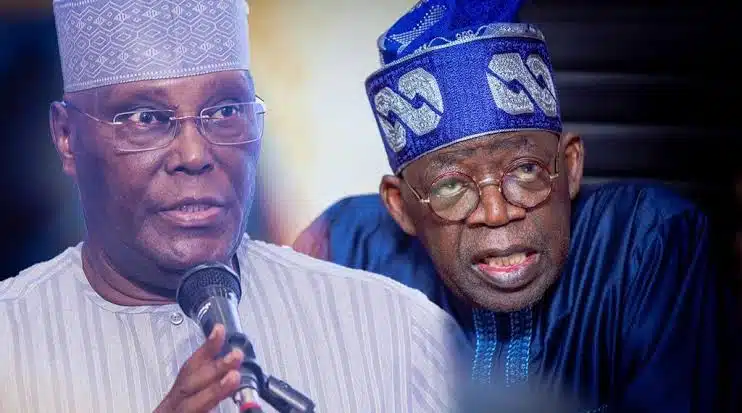
Former Vice President and presidential candidate of the African Democratic Congress (ADC), Atiku Abubakar, has condemned the increase in fees charged by Federal Unity Colleges and the reported approval of a uniform ₦50,000 examination fee for West African Examinations Council (WAEC) and National Examinations Council (NECO) candidates from 2027.
Atiku described the increases as cruel, economically insensitive and inconsistent with the Federal Government’s responsibility to make education accessible to every Nigerian child.
In a statement issued on Sunday by his Senior Special Assistant on Public Communication, Phrank Shaibu, the former vice president said the federal government was imposing additional financial burdens on families already struggling with inflation, rising food and transportation costs, electricity tariffs, unemployment and stagnant incomes.
He warned that the measures could force more children out of school and further deepen Nigeria’s education crisis.
“A government that genuinely believes in the future of its people does not erect financial barriers between children and education. It removes them,” Atiku said.
“Education is not a privilege reserved for the wealthy; it is the birthright of every Nigerian child and the foundation upon which prosperous nations are built.”
Atiku said the policy was particularly troubling because Nigeria already had one of the world’s largest populations of out-of-school children.
He argued that a government faced with such a challenge should be investing heavily in bringing children back into classrooms rather than introducing policies capable of excluding more pupils.
“Nigeria already bears the painful distinction of having one of the largest populations of out-of-school children in the world,” he said.
“Depending on the methodology and age group measured, between 10.5 million and about 15 million Nigerian children and young people are already outside the classroom.”
Atiku added that the fee increases would disproportionately affect children from poor and middle-income families whose parents were already struggling to meet basic needs.
According to him, every additional cost imposed on education could deny another child the opportunity to learn and improve their future.
The ADC presidential candidate warned that the consequences of limiting access to education would extend beyond schools.
He said children excluded from education could become more vulnerable to poverty, unemployment, child labour, criminal exploitation, drug abuse and insecurity.
“Every child priced out of education today becomes tomorrow’s victim of unemployment, poverty, child labour, criminal exploitation, drug abuse or insecurity,” Atiku said.
“Nations do not become prosperous by making education more expensive; they prosper by making education more accessible.”
He described the proposed ₦50,000 WAEC and NECO fee as a barrier that could prevent indigent but academically qualified students from progressing to tertiary institutions.
According to him, many students from low-income homes could lose the opportunity to compete for university admission simply because their families could not afford the qualifying examinations.
Atiku also criticised what he described as inadequate investment in Nigeria’s tertiary institutions.
He said public universities lacked sufficient lecture halls, laboratories, hostels, libraries and other facilities needed to accommodate the number of students seeking admission annually.
The former vice president claimed that Nigerian universities could admit only between 500,000 and 700,000 students every year despite more than two million candidates seeking admission.
He argued that the combination of limited university spaces and increased examination fees amounted to a double punishment for students from poor homes.
“The result is a cruel double punishment: first, millions of qualified young Nigerians cannot secure admission because there are insufficient spaces; second, many will now be priced out of even competing for those limited spaces,” Atiku said.
“That is not educational reform; it is the systematic rationing of opportunity and the gradual exclusion of the children of the poor from the promise of higher education.”
Atiku also questioned the Federal Government’s promotion of the Nigerian Education Loan Fund as a major achievement while the cost of obtaining secondary school qualifications was increasing.
He said a university loan would not benefit a child who had already been excluded from secondary education or could not afford WAEC and NECO fees.
“A university loan offers little comfort to a child who has already been priced out of secondary education or cannot afford the qualifying examination required to secure admission,” he said.
“A government cannot credibly claim to be expanding access to higher education while simultaneously erecting financial barriers that prevent millions of young Nigerians from ever reaching the university gates.”
Atiku maintained that genuine education reform should begin with affordability at the primary and secondary levels, improved infrastructure and expanded capacity in tertiary institutions.
He added that the government should ensure that poverty did not prevent any child from attending school.
“A government that truly believes in education invests in classrooms before it invests in loans,” he said.
Atiku asked President Bola Tinubu to immediately reverse the increases in Federal Unity College fees and the proposed ₦50,000 examination charge.
He also urged the Federal Government to convene an urgent meeting with education stakeholders to develop sustainable methods of financing public education.
The former vice president called for increased investment in schools, recruitment of qualified teachers, improvement of educational infrastructure and expansion of the admission capacity of tertiary institutions.
He said an ADC-led government would reverse policies that made education unaffordable and restore education as a public good.
Author:

Report an error in this article

PFIPC Scandal: Pressure Mounts On Tinubu To Drop ICPC Probe

Oyo Abduction: You Are Too Lazy – Atiku Blasts Presidency Over Silence Claim

Their Conduct Shows They Hate Nigerians – Presidency Blasts Opposition

Tinubu Should Have Addressed Nigerians After Oyo Schoolchildren Rescue – Atiku

Atiku Gives Tinubu Seven-day Ultimatum To Sign Bill Or Resign

