
Unlike Senate, Reps Probe ₦1.3 Billion Budget Allocation To ‘Non-existent’ PFIPC
 Follow on Google News

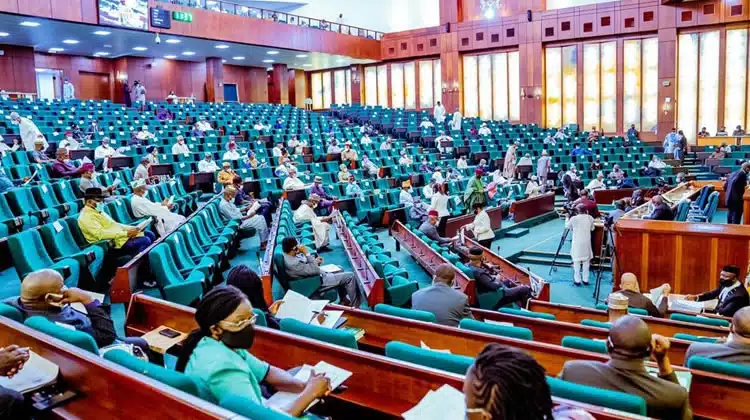
The House of Representatives has launched an investigation into the inclusion of more than ₦1.3 billion in the 2026 budget for the disputed Presidential Foreign Intervention Promotion Council (PFIPC), warning that the development poses a serious threat to the integrity of Nigeria’s appropriation process and public financial management system.
The resolution followed the adoption of a motion of urgent public importance sponsored by Yusuf Gagdi, an All Progressives Congress (APC) lawmaker from Plateau State, during plenary.
Gagdi warned that the controversy surrounding the PFIPC had exposed serious weaknesses in the country’s budget preparation and verification processes, raising fears that other fictitious organisations might have found their way into previous federal budgets without detection.
The House subsequently resolved to investigate how the council secured budgetary provisions despite allegedly having no legal or executive instrument establishing it.
Leading the debate, Gagdi said the organisation reportedly operated from the Federal Secretariat Complex in Abuja, interacted with several government institutions and presented itself as a legitimate government body before the Presidency publicly declared that it did not exist.
He acknowledged that the activities of the organisation were already the subject of criminal proceedings before the Federal High Court in Abuja but stressed that the parliamentary investigation would be restricted to the budgetary implications and institutional failures surrounding the controversy.
According to the lawmaker, the PFIPC allegedly relied on a document purporting to establish it under “Chapter N2117 Laws of the Federation of Nigeria.”
He said checks with official records of the National Assembly showed that no legislation establishing the council was ever passed.
Gagdi explained that the closest relevant legislation was the Nigerian Investment Promotion Commission Act, arguing that the purported legal instrument relied upon by the organisation was “manifestly false” when compared with official statutory records.
He further noted that more than ₦1.3bn linked to the disputed council appeared in the 2026 budget framework, raising questions about how an organisation without an established legal foundation passed through executive and legislative budget scrutiny.
“The ease with which a single unestablished entity processed through official channels suggests a systemic vulnerability rather than an isolated administrative lapse,” Gagdi said.
Reps Order Sweeping Verification
Following the adoption of the motion, the House resolved to constitute an ad hoc committee to investigate how the alleged budgetary provision entered the 2026 Appropriation Framework.
The committee is expected to trace the allocation from the executive budget proposal through the various stages of legislative committee consideration.
Lawmakers also resolved to invite the Minister of Budget and Economic Planning and the Director-General of the Budget Office of the Federation to explain the verification procedures used before new entities are admitted into the federal budget.
The House further directed that every ministry, department, agency and government body listed in the 2025 and 2026 appropriation frameworks be verified against the legal instruments establishing them.
It also requested the Office of the Accountant-General of the Federation to confirm that no public funds had been released to the PFIPC and that no payment warrant would be issued in favour of the organisation pending the conclusion of the investigation.
The lawmakers additionally mandated the Budget Office to henceforth submit, alongside every appropriation bill, a comprehensive and certified list of all government bodies proposed for funding, with the enabling law establishing each organisation clearly stated.
Gagdi said the measures were necessary to prevent fictitious organisations from gaining access to public funds.
He anchored the resolutions on Sections 80, 81, 88 and 89 of the 1999 Constitution, as amended, as well as Sections 19, 30 and 50 of the Fiscal Responsibility Act, 2007.
Supporting the motion, the Deputy Speaker of the House, Benjamin Kalu, disclosed that he had personally met representatives of the disputed organisation after his office received what appeared to be an official government letter.
Kalu said the correspondence, dated May 2, 2025, identified the organisation as both the Presidential Economic Advisory Council and the Presidential Foreign Intervention Promotion Council (PEAC/PFIPC).
According to him, the letter carried the Presidency’s insignia, a Federal Secretariat address and a “.gov.ng” website.
He explained that his office verified the organisation’s physical address before granting its representatives an audience.
Kalu said officials confirmed that the organisation operated from the stated location at the Federal Secretariat.
However, he said the delegation allegedly abandoned the policy matters contained in its correspondence during the meeting and appeared more interested in taking photographs.
“This shows that having the Presidency on a letterhead is no longer sufficient proof that an agency is genuine,” Kalu said.
The Deputy Speaker argued that the House must establish how the organisation obtained office accommodation and gained access to senior government officials.
Presidency Disowns Council
At the centre of the controversy is Adeniyi Adeyemi, who claimed to be the Director-General of the PFIPC and the PEAC.
Adeyemi and his associates reportedly attended official functions, held meetings with senior government officials and communicated with public institutions using official-looking correspondence.
The Presidency subsequently disowned Adeyemi and the organisations.
The Chief of Staff to the President, Femi Gbajabiamila, maintained that neither the PFIPC nor the PEAC existed under the administration of President Bola Tinubu and warned government institutions against dealing with the organisations.
Adeyemi and others are currently facing criminal proceedings over allegations linked to the controversy.
They are presumed innocent until proven guilty by a competent court.
Meanwhile, the Senate on Wednesday declined to open a comprehensive investigation into the budgetary allocation, operations and controversy surrounding the purported PFIPC.
The move was initiated by Senator Suleiman Kawu, representing Kano South, who raised a point of order during plenary.
Kawu, relying on Order 9 and Rule 9(c) of the Senate Standing Orders 2026, presented a motion titled, “Urgent Need to Investigate the Budgetary Allocation, Operations, and Controversy surrounding the purported Presidential Foreign Intervention Promotion Council (PFIPC) to safeguard the Integrity of the Senate and the Federal Government.”
He argued that the controversy surrounding the council posed a threat to the integrity of the Senate, the credibility of the National Assembly and the legislature’s constitutional powers of appropriation and oversight.
“The Senate notes with concern that, in recent weeks, the public space has been inundated with allegations, controversies, accusations and counter-accusations concerning an entity known as the Presidential Foreign Intervention Promotion Council (PFIPC),” Kawu said.
In his prayers, Kawu asked the Senate to condemn what he described as administrative lapses, internal collaborations or fraudulent schemes that allegedly enabled a purportedly non-existent or unauthorised entity under Budget Code 0111062001 to be included in the 2026 Appropriation Act.
He also urged the Senate to direct its Committees on Ethics, Code of Conduct and Public Petitions, as well as Appropriations, to conduct a comprehensive investigation into the inclusion of the PFIPC in the 2026 budget.
After the motion was presented, the Deputy President of the Senate, Senator Barau Jibrin, who presided over plenary, ruled that the matter should not be debated.
Barau said the issue was already being handled by the executive arm of government.
According to him, President Bola Tinubu had directed the Independent Corrupt Practices and Other Related Offences Commission (ICPC) to investigate the matter.
He urged the Senate to await the outcome of the executive investigation before taking further action.
Author:


PFIPC: They Jumped Our Fence – Adeniyi Adeyemi’s Father Recounts Police Invasion

PFIPC: ADC Rejects ICPC Probe, Demands Judicial Panel

‘Tinubu Urging Gbajabiamila To Go And Sin More’ – Atiku’s Aide
Rowdy Session In House Of Reps Over Motion To Summon Tinubu

Atiku Faults Tinubu’s ICPC Probe Into PFIPC Scandal
