
Iran Retaliates, Fires Missiles, Drones At US Bases After Fresh Strikes
 Follow on Google News
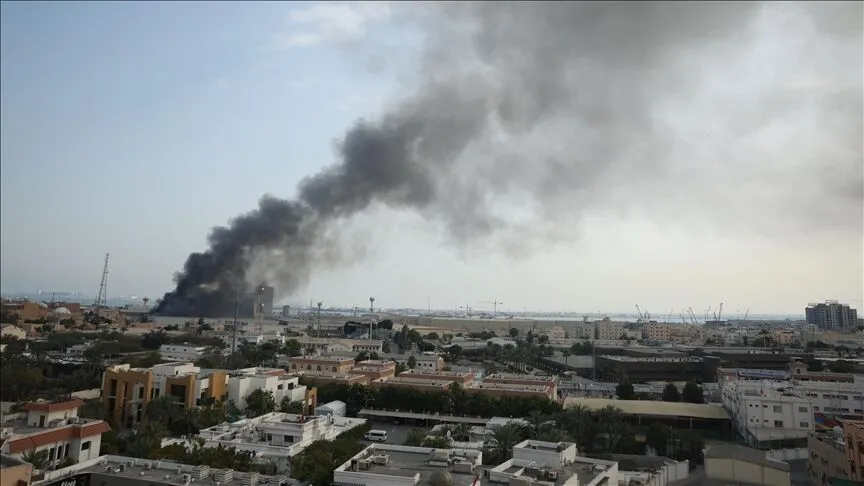
Iran’s Revolutionary Guards said on Wednesday (today) that they launched missile and drone attacks on United States military installations in Bahrain and Kuwait, in what they described as retaliation for fresh US strikes on Iran.
Naija News reports that the development further escalated tensions in the Gulf, coming hours after Washington carried out a new wave of military attacks on Iranian targets following alleged attacks on commercial tankers in the Strait of Hormuz.
According to reports, Islamic Revolutionary Guard Corps said it carried out a joint operation against “US military facilities, including Bahrain’s Fifth Naval District at Bandar Salman and Ali Al Salem Air Base in Kuwait.”
The Guards also claimed that they shot down a US MQ-9 drone during the operation, although the claim had not been independently verified.
Air raid sirens reportedly sounded in Bahrain and Kuwait as the attacks unfolded.
The Kuwaiti army said its air defence systems were confronting “hostile” missile and drone attacks, while authorities in Bahrain also confirmed the activation of air defence measures.
The latest strikes followed a fresh US military operation against Iran and Washington’s decision to revoke a licence that had allowed Tehran to sell oil.
The US said its action was in response to attacks on three commercial tankers transiting the Strait of Hormuz, one of the world’s most important oil shipping routes.
CENTCOM Targets IRGC Boats
The US Central Command (CENTCOM) said more than 60 boats belonging to the Revolutionary Guards were among the targets hit during its operation.
Naija News understands that CENTCOM is one of the unified combatant commands of the United States Armed Forces. Established in January 1983, it is responsible for directing and overseeing U.S. military operations and diplomatic partnerships across a vast, strategic area of the globe.
According to Investing, CENTCOM said in a statement, “The unwarranted aggression by Iranian forces is a clear and dangerous violation of the ceasefire and undermines freedom of navigation.”
The exchange marks a further deterioration of the fragile ceasefire reached after weeks of hostilities between Washington and Tehran.
The truce was expected to create a 60-day window for indirect negotiations on a broader agreement, but talks held in Qatar last week ended without a breakthrough.
Oil Prices Rise
Global oil prices climbed by more than two per cent on Tuesday as traders reacted to rising geopolitical risks in the Gulf.
According to Oilprice.com, Brent crude futures rose by $1.73, or 2.52 per cent, to $70.28 per barrel.
Concerns have continued to mount around the Strait of Hormuz, through which roughly one-fifth of global oil supplies pass.
The latest US military action followed attacks on commercial shipping in the waterway, while Iran has maintained that it has the right to regulate activity in the strategic strait.
The renewed hostilities have raised fresh concerns over regional security and global energy supplies.
Reuters reports claim that Iranian Foreign Minister Abbas Araqchi warned that negotiations on a permanent agreement would “not commence if threats continue,” underscoring the uncertain future of diplomatic efforts as military exchanges continue.
Author:


Fresh Tension As US Bombs Iran Over Strait Of Hormuz Attacks

Folarin Balogun Admits Belgium Deserved Win After USA Crash Out Of World Cup

Belgium Players Admit Balogun Ban U-turn Fuelled World Cup Win Over USA

Belgium Thrash USA 4-1, Book Spain World Cup Quarter-Final Clash

If Belgium Beat USA I Will Say It Was Rigged, Says Trump
