
Petrol Price Should Reflect Crude Oil Decline – FG Charges NMDPRA
 Follow on Google News
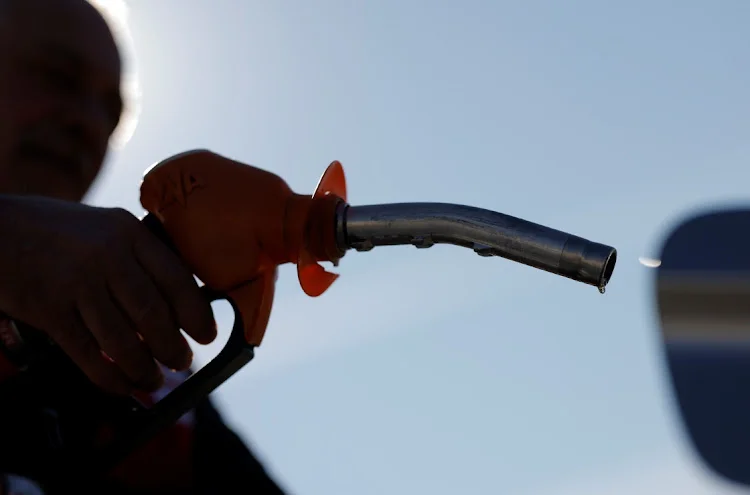
The Federal Government has directed the Nigerian Midstream and Downstream Petroleum Regulatory Authority (NMDPRA) to ensure that petroleum marketers do not exploit Nigerians through excessive pricing under the deregulated downstream market.
Naija News reports that the Minister of State for Petroleum Resources (Oil), Senator Heineken Lokpobiri, gave the directive on Monday in Abuja while delivering the keynote address at the 2026 NMDPRA General Counsel and Legal Advisers Forum.
The two-day forum has the theme, “Beyond Compliance: Driving Regulatory Certainty and Investment Confidence in Nigeria’s Petroleum Sector.”
Lokpobiri said that although the downstream petroleum sector had been fully deregulated, the regulator must ensure that deregulation is not used as an avenue for profiteering at the expense of consumers.
According to him, following the de-escalation of tensions in the Middle East and the decline in global crude oil prices, Nigerians expected a corresponding reduction in the pump prices of Premium Motor Spirit (PMS), also known as petrol.
He noted that this had yet to happen, as refiners and marketers had continued to sell at elevated pump prices despite the significant drop in crude oil prices from a peak of $120 per barrel to $72 per barrel last week.
He said, “Following the de-escalation of tensions between Iran and the United States, we expected to see commensurate downward adjustment in the prices of PMS and other petroleum products. However, that has not yet happened.
“While we believe that market forces will eventually restore equilibrium, the regulator also has a statutory responsibility to ensure that deregulation does not become an avenue for profiteering. This must be done in line with the extant provisions of the Petroleum Industry Act.”
FG Seeks Pump Accuracy
The minister also charged the authority to intensify monitoring of filling stations to ensure that consumers receive the exact quantity of fuel purchased.
He said consumer protection must remain a key responsibility of the regulator in a deregulated market.
“Beyond allowing prices to be determined by market forces, the question is: what is the regulator doing to ensure that consumers receive the correct quantity of product? When someone pays for 10 litres of Premium Motor Spirit, they should receive exactly 10 litres, not less,” he said.
Lokpobiri added that despite recent geopolitical tensions arising from the conflict involving the United States and Iran, Nigeria did not experience fuel shortages.
He attributed the stability to the deregulation of the downstream sector and the operationalisation of domestic refineries.
The minister described the Petroleum Industry Act as the foundation for transforming Nigeria’s petroleum industry, but stressed that investor confidence would depend on consistent and predictable regulation.
“The PIA gave us the architecture. What we must now build is the culture, the institutional habits, the interpretive discipline and the regulatory character that make the law’s objectives real for every investor evaluating Nigeria against any other destination in the world,” he said.
Lokpobiri urged legal advisers and general counsels in the petroleum industry to serve as strategic partners in promoting investment rather than creating unnecessary regulatory bottlenecks.
“We will not be judged by the number of regulations we produce or the volume of guidelines we issue. We will be judged by the investments we attract, the businesses we enable, the jobs we create and the value we leave behind for future generations,” he added.
NMDPRA Promises Fair Regulation
Earlier, the Authority Chief Executive of NMDPRA, Mallam Rabiu Umar, said the petroleum industry had reached a stage where regulatory certainty, transparency and investor confidence had become more important than mere compliance with regulations.
Umar said the implementation of the PIA had shifted attention from what the law provides to how it is being implemented and whether it is delivering the certainty required by investors.
“Compliance remains the foundation. The broader objective is to create a petroleum industry characterised by certainty, predictability, transparency and confidence,” he said.
He noted that the authority recognised implementation challenges and areas of ambiguity within the regulatory framework and was committed to engaging stakeholders to improve regulatory outcomes.
Umar assured industry players that under his leadership, the authority would continue to regulate fairly and consistently while strengthening transparency and stakeholder engagement.
In his presentation, the Secretary and Legal Adviser of NMDPRA, Dr Joseph Tolorunse, said regulatory certainty had ensured stability of fiscal rules throughout project lifespans and helped to avoid policy reversals.
Tolorunse added that the law had made Nigeria’s oil and gas industry competitive, noting that competitiveness would attract investment, with “investment leading to growth.”

Why Petrol Prices Remain High In Nigeria Despite Global Oil Prices Drop

Trump Orders Investigation Into Rising Fuel Prices

FG Takes Fresh Action On Rising Price Of Cooking Gas

Cooking Gas Price Hits ₦2,400/Kg
Cooking Gas Price Hits ₦2,000/Kg
