CBN Unveils New Payments System To Boost Financial Inclusion
 Follow on Google News
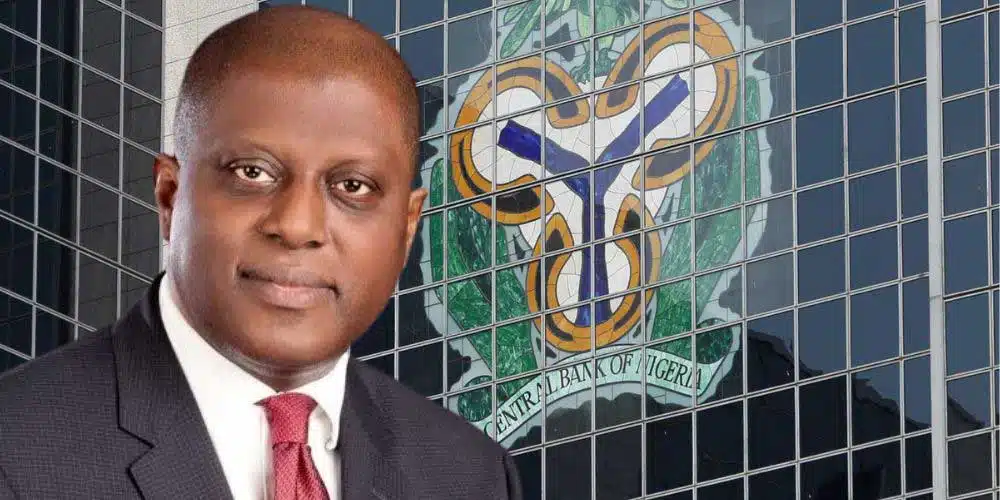
The Central Bank of Nigeria (CBN) has unveiled the Nigeria Payments System Vision (PSV) 2028, a new framework aimed at building a more efficient, innovative, secure and financially inclusive payment system for the country.
Naija News reports that the CBN Governor, Olayemi Cardoso, unveiled the framework in Abuja, saying it would help accelerate the contribution of the financial sector to Nigeria’s Gross Domestic Product.
Cardoso said the initiative was designed to strengthen the country’s payment infrastructure, deepen financial inclusion and improve Nigeria’s competitiveness in the global financial system.
According to him, a modern payment system is central to national development and must be built in a way that allows every Nigerian to participate meaningfully in the formal financial sector.
He said, “The vision is anchored on a modern Payment System which is indispensable to national growth, financial inclusion and international competitiveness. It seeks to ensure that every Nigerian participate meaningfully in the financial industry.”
Cardoso said Nigeria had made major progress in digital payments over the past two decades, adding that the country’s payment ecosystem had grown into one of the most dynamic and innovative in the world.
He noted that developments in instant payments, digital adoption and fintech-led innovation had placed Nigeria ahead of many countries on the continent and close to leading global markets in some areas.
The CBN governor said, “Over the past two decades, Nigeria’s payments ecosystem has evolved into one of the most dynamic and innovative in the world. From instant payments and digital adoption to fintech-led innovation, our progress has often set the pace on the continent and, in several respects, compares favourably with leading global markets.
“While this progress has not always been fully reflected in global narratives, its impact on economic activity, financial inclusion, and system resilience is evident across our economy.”
He said the speed, security and reach of payment systems had become major factors in determining the competitiveness of nations.
Cardoso added that Nigeria’s experience showed the importance of sustained investment in innovation, infrastructure and inclusion.
The CBN governor explained that the Payments System Vision 2028 was built on the strong foundation already established in Nigeria’s payment industry.
He said the new framework would serve as a strategic roadmap for the next phase of transformation in the sector.
According to him, the aim is to build a payment ecosystem that is secure, inclusive, resilient and globally competitive.
Cardoso stated, “The Payments System Vision 2028 (PSV 2028) builds on this strong foundation. It provides a strategic roadmap for the next phase of transformation and reflects our ambition to build a payments ecosystem that is secure, inclusive, resilient, and globally competitive.”
He said the global payments landscape was changing rapidly, with new technologies reshaping how value is exchanged across countries and sectors.
The CBN governor noted that digital commerce was expanding, cross-border transactions were becoming more important, and expectations around speed, convenience, security and interoperability were rising.
Cardoso said payment systems could no longer be viewed only as channels for transferring money, but as platforms for innovation, financial inclusion and economic growth.
He said efficient payment systems would reduce the cost of doing business, improve productivity, support trade, strengthen transparency and broaden participation in economic activity.
He said, “In this environment, payments are no longer merely a means of transferring funds. They are platforms for innovation, enablers of inclusion, and critical infrastructure for economic growth.
“For Nigeria, efficient payment systems reduce the cost of doing business, improve productivity, strengthen transparency, support trade, and broaden participation in economic activity. In a modern economy, payment infrastructure is not simply a financial utility, it is a strategic national asset.”
The CBN governor said PSV 2028 would ensure that Nigeria’s payment ecosystem remains secure, resilient, inclusive and globally competitive while supporting broader economic goals.
He added that the framework formed part of the wider reform agenda being pursued by the apex bank since 2023.
Framework To Support Trade, Remittances
Cardoso said strengthening the country’s payment system would also support efforts to stabilise the economy, facilitate trade and remittance flows, deepen investor confidence and improve Nigeria’s external position over time.
He said, “That is why PSV 2028 matters. It is designed to ensure that Nigeria’s payments ecosystem remains secure, resilient, inclusive, and globally competitive while supporting our broader economic aspirations.
“PSV 2028 is also an important component of the broader reform agenda that the Central Bank has pursued since 2023. By strengthening the efficiency, resilience, and international connectivity of our payments ecosystem, this Vision will support ongoing efforts to stabilize the economy, facilitate trade and remittance flows, deepen investor confidence, and contribute to improvements in Nigeria’s external and Balance of Payments position over time.”
The CBN governor, however, said the success of the vision would depend largely on effective implementation and collaboration among key stakeholders in the financial and technology sectors.
He urged banks, fintech companies, the Nigerian Communications Commission, telecommunications companies and other players in the industry to play their roles in achieving the objectives of the framework.
CBN Lists Five Priority Areas
Earlier, the Deputy Governor, Policy, of the CBN, Dr Muhammad Abdullahi, said the new vision was anchored on five mutually reinforcing priorities.
He said the priorities would strengthen payment infrastructure, deepen inclusion, support innovation, improve cross-border transactions and safeguard the integrity of the financial system.
Abdullahi said the framework would help build an interoperable and resilient payment infrastructure capable of supporting a digital economy at scale.
He stated that PSV 2028 would also prioritise financial inclusion, consumer protection and financial literacy so that individuals, households and businesses could participate confidently in the formal financial system.
According to him, the vision “seeks to build interoperable, and resilient payment infrastructure capable of supporting a digital economy at scale; it prioritises financial inclusion, consumer protection, and financial literacy to ensure that individuals, households, and businesses can participate confidently and meaningfully in the formal financial system.”
Abdullahi added that the framework would support innovation and emerging technologies that could expand access, improve efficiency and create new economic opportunities.
He said PSV 2028 would embrace open banking, digital assets, artificial intelligence and other transformative solutions.
The deputy governor said the framework “embraces innovation and emerging technologies, including open banking, digital assets, artificial intelligence and other transformative solutions that have potential to improve efficiency, expand access and unlock new economic opportunities.”

Shake Up In CBN As Deputy Governors Are Redeployed (Full List)

CBN Gives Fresh Deadline For PoS Operators, Makes Major Change To Terminal Rules
CBN Keeps Interest Rate At 26.5%

Emefiele Trial: Court Admits Co-defendant’s Extra-judicial Statements

Senate Confirms Yuguda As CBN Deputy Governor