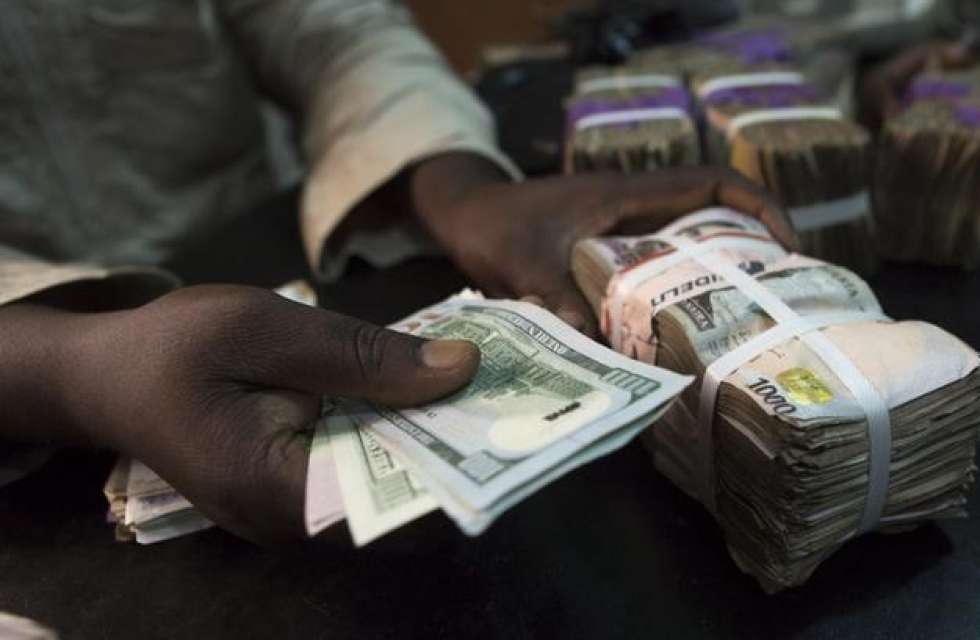
Naira Records Marginal Gain Despite Drop In External Reserves
 Follow on Google News

The naira closed April 2026 on a stronger note against the United States dollar, recording its first April gain since the Nigerian Autonomous Foreign Exchange Market era began.
Data from the Central Bank of Nigeria showed that the local currency appreciated from its March closing rate of N1,387 per dollar to end April at about N1,374 per dollar in the official market.
The development marked a rare positive performance for the naira in April, a month in which the currency had closed weaker in each of the previous years since 2024.
Market data also showed that the naira ended trading on April 30 at N1,374.94 per dollar at the Nigerian Foreign Exchange Market, compared with N1,378.70 at the beginning of the month, representing a marginal gain of 0.27 per cent.
In the parallel market, the local currency also strengthened by N10, closing at N1,400 per dollar from N1,410 recorded at the start of April.
FX Liquidity Improves
The naira’s performance was supported by improved liquidity in the foreign exchange market, as total FX turnover rose to about $10bn in April.
The figure was slightly higher than the $9.92bn recorded in March, showing a 0.8 per cent month-on-month increase.
Trading activity also improved significantly during the period, with total deals rising by 28.61 per cent to 7,889 in April, compared with 6,134 trades recorded in March.
A breakdown of the figures showed that the Nigerian Foreign Exchange Market accounted for most of the transactions, recording 5,795 deals valued at $8.14bn.
Although turnover in the segment declined slightly from $8.19bn in March, the number of deals rose by 28.18 per cent from 4,521 trades in the previous month.
The interbank segment also recorded improved activity, with deals rising by 29.82 per cent to 2,094 in April, from 1,613 in March.
Turnover in the interbank market increased by 7.5 per cent to $1.86bn, compared with $1.73bn recorded in March.
Reduced Volatility In Official Market
The official market showed a relatively stable trading pattern during the month, with the naira moving within a narrow range of about N1,340 to N1,389 per dollar.
The currency opened April at about N1,376 per dollar and briefly came under pressure before recording a steadier appreciation trend.
Its strongest level during the month was recorded on April 16, when it traded around N1,341.01 per dollar.
Analysts linked the improved performance to stronger FX inflows, better market confidence, diaspora remittances, oil-related inflows and reduced speculative demand for the dollar.
The development also followed the Central Bank’s sustained monetary tightening and efforts to improve liquidity in the foreign exchange market.
External Reserves Drop
Despite the improved liquidity, Nigeria’s external reserves declined during the month.
CBN data showed that reserves fell by $810m, or 1.65 per cent, to $48.37bn as of April 29, from $49.18bn at the beginning of the month.
The CBN Governor, Olayemi Cardoso, however, dismissed concerns over the decline, saying the movement reflected normal market dynamics in a more liberalised foreign exchange system.
Cardoso said Nigeria’s reserve position remained strong, adding that the current level could cover about 13 months of imports.
He also said the foreign exchange market had shifted from one largely dominated by the apex bank to a more market-driven system supported by liquidity and investor confidence.
According to him, short-term movements in reserves should not be a major concern in a system where investors are allowed to enter and exit the market freely.
The CBN governor also noted that diaspora remittances were averaging about $600m monthly, with a target of $1bn per month by the end of the year.
He said the apex bank was working to remove bottlenecks in formal remittance channels and improve access for Nigerians in the diaspora through the banking system.

Latest Exchange Rate: Naira Slips Against US Dollar Amid Middle East Crisis

Nigeria’s Economy Stronger Now, Can Withstand Global Shocks – Cardoso

Central Bank Stopped Naira From Appreciating To ₦1000/$ – Presidency

Emefiele: How Banks Caused Naira Scarcity, Held Back Redesigned Notes

Ex-US Defence Staff Risks 100-year Jail For Allegedly Helping Nigeria-based Fraudsters