
Esther Mensah’s Cancer Battle: Jehovah’s Witness Church Explains Blood Transfusion Policy
 Follow on Google News
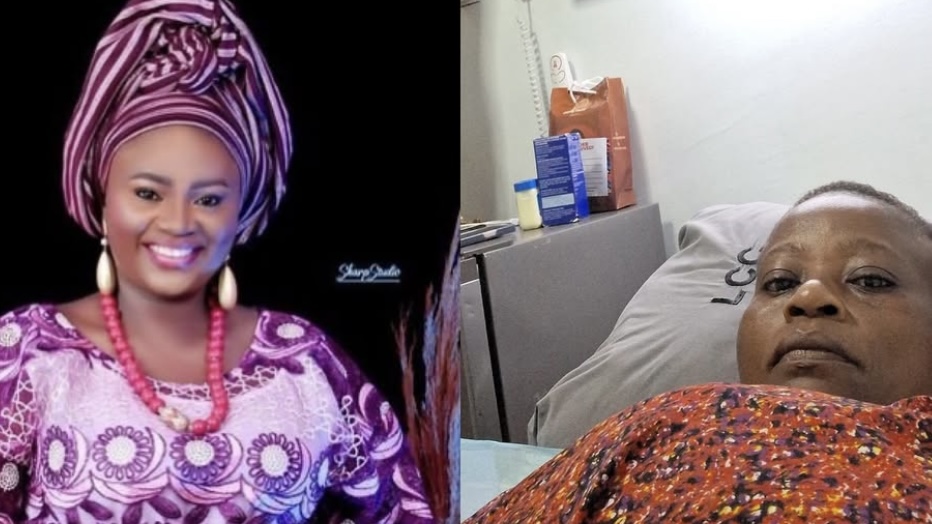
Nigerians were moved when news spread that Esther Mensah, a popular online personality and personal shopper in Lagos, was battling breast cancer.
Naija News reports that social media quickly became a hub of support, and over ₦30 million was raised to assist in her medical treatment.
The fundraiser was spearheaded by well‑known influencer Wisdom Obi‑Dickson (Wizarab).
Yet, amid the wave of generosity, Esther made a choice that stirred debate: she refused a life-saving blood transfusion, citing her religious beliefs.
Esther, affectionately known as “Auntie Esther” online, has long built a reputation for connecting with followers through her business and social media presence.
But behind the posts and interactions, she faces a reality that is far more serious than the virtual world: a fight for her life against cancer.
Doctors at the treatment facility recommended that Esther undergo a blood transfusion, a crucial procedure to raise her blood count before starting chemotherapy.
The publicity secretary of the Kingdom Hall of Jehovah’s Witnesses in Ikeja, who agreed to provide insight under anonymity, explained the faith that guides her decision.
He said, “Jehovah’s Witnesses are taught to respect God’s law as we understand it. That includes choosing medical treatments that do not involve blood. This is not about rejecting life, it’s about obedience to conscience and scripture.
“Our position on blood comes directly from the Bible. In the book of Genesis 9:4, God instructed mankind not to eat flesh with its blood, showing that blood is sacred and belongs to God.
“Later, under the Mosaic Law, Leviticus 17:10–14 clearly states that anyone who takes blood is acting against God’s command, because ‘the life of the flesh is in the blood.’ This shows that blood represents life and must be treated with deep respect.”
“In the New Testament, when the apostles addressed Christians, they repeated this instruction. Acts 15:28–29 tells believers to abstain from blood. This directive was not limited to food alone; it was a moral and spiritual command meant to guide Christian conduct.
“Because of these scriptures, Jehovah’s Witnesses believe that accepting blood into the body, whether by eating or transfusion, goes against God’s expressed will. This is why members choose alternative medical treatments that do not involve blood.
“It is important to understand that this decision is not made lightly. It is a matter of obedience to God, guided by Scripture and personal conscience.
“We stand with our members spiritually and emotionally. The choice to refuse blood is personal, and we support them in seeking alternatives that align with their beliefs.
“No matter what the world thinks, every human being has the right to decide their course. Our role is not to judge, but to support.
“Faith and health can sometimes lead to challenging choices. Our hope is that Esther receives both the care she needs and the respect for her decisions.
“While members may refuse blood, they are encouraged to pursue all other forms of treatment and care. The church community offers emotional and spiritual support to help them through these difficult times.”
Wizarab publicly announced that he and a medical coordinator, Bearded Shina, had stepped back from Esther’s case after disagreements over her treatment direction.
He cited professional concerns and frustration that the recommended medical plan was being set aside.
“While we respect her religious belief, we do not have to be a part of it and the ensuing consequences,” he wrote on his 𝕏 account, explaining his decision to withdraw.
Tension As Bandits Attack Kwara Police Station, Emir’s Palace

Deploy Modern Technology To End South-West Insecurity – Monarch Begs FG, Governors

2027: Nigeria Is Ready For A New Era – Soludo’s Son Sends Message To Tinubu

Police Arrest Two Over Killing Of Imo Nursing Student

Oyo Teacher Killed In School Attack Died Childless After 18-Year Marriage — Family
